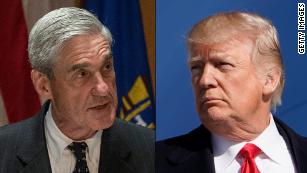
Trump Cancels Meeting With Putin, Citing Naval Clash Between Russia and Ukraine

New York Time – BUENOS AIRES — President Trump on Thursday abruptly canceled his planned meeting with President Vladimir V. Putin of Russia, citing the unresolved naval standoff between Russia and Ukraine and upending his hopes of further cementing the relationship between the two leaders.

The president’s decision, announced on Twitter barely an hour after he told reporters he still expected to go through with the meeting, came shortly after new revelations that Mr. Trump’s personal lawyer was secretly negotiating to build a tower in Moscow during the 2016 presidential election.

The president has adamantly denied any collusion with Russia during the campaign and dismissed questions about business ventures or economic interests in Russia. But Michael D. Cohen, his former personal lawyer and fixer, admitted in court on Thursday that he had engaged in negotiations for a Moscow tower well into the campaign and personally briefed Mr. Trump and members of his family.

The president’s sudden decision to scrap the meeting was the latest twist in months of efforts to set up a session between the two leaders. Mr. Trump announced the cancellation in a Twitter message while on Air Force One flying to Buenos Aires for an economic summit meeting, where he was scheduled to sit down with Mr. Putin. T he Kremlin said it had not even been notified.

“Based on the fact that the ships and sailors have not been returned to Ukraine from Russia, I have decided it would be best for all parties concerned to cancel my previously scheduled meeting in Argentina with President Vladimir Putin,” Mr. Trump wrote on Twitter.

“I look forward to a meaningful Summit again as soon as this situation is resolved!” he added.

Speaking with reporters on the South Lawn before leaving the White House, he sounded more positive about the session.

“I probably will be meeting with President Putin,” he said. “I think it is a very good time to have a meeting.” He added that he would be getting a report on Air Force One about the clash with Ukraine “and that will determine what I’m going to do.”

Sarah Huckabee Sanders, the White House press secretary, told reporters traveling with the president on Air Force One that he opted to scrub the meeting after reviewing the report on Russia’s actions against Ukraine. Mr. Trump conferred with Secretary of State Mike Pompeo, and with John F. Kelly, the White House chief of staff, who were on the plane, and by phone with John R. Bolton, his national security adviser, who was in Brazil.

Dmitry Peskov, the Kremlin spokesman, told Russian reporters that they had seen Mr. Trump’s tweet but had no other word from the American government.

“We don’t have official information,” he said, according to the Tass news agency. He added, “If this is so,” then Mr. Putin “will have a few additional hours in the schedule for useful meetings on the sidelines of the summit.”

The meeting was scrapped days after Russian forces seized three small Ukrainian naval vessels and more than 20 sailors, including at least three wounded in a shooting by the Russian side, and briefly blocked passage through the Kerch Strait. Ukraine’s government declared temporary martial law.

While Mr. Trump had said earlier in the week that he was not happy about the aggression, he had left any stronger denunciation of Russia’s action to his United Nations ambassador. Members of Congress on both sides of the aisle had called on Mr. Trump to take a tougher stance and even cancel the meeting with Mr. Putin.

The two leaders were to get together while both were in Buenos Aires for the Group of 20, or G-20, summit meeting of large economic powers. It was to be their first meeting since they saw each other in Helsinki and Mr. Trump appeared to equate Mr. Putin’s denial that Russia interfered in the 2016 presidential elections with the firm conclusions of American intelligence agencies that it did.

Mr. Trump had been trying to set up another meeting for months, first suggesting Mr. Putin come visit the White House and later arranging to sit down together in Paris earlier this month, but neither idea went ahead. Instead, the two leaders settled on Buenos Aires for their next meeting.

The session was already freighted by multiple tension points between the two countries in addition to the lingering issue of the election meddling.

Mr. Trump recently declared that he would withdraw the United States from the Intermediate-Range Nuclear Forces Treaty signed by Ronald Reagan and Mikhail Gorbachev in 1987, citing Russian violations, an issue that was sure to come up. Syria and Iran were other flash points expected to be discussed.

But the meeting also could have raised questions about Mr. Trump’s ties to Russia after Mr. Cohen’s revelations. The special counsel, Robert S. Mueller III, has been investigating whether any of Mr. Trump’s campaign aides or associates collaborated with Russia during the election season to release stolen Democratic emails or otherwise interfere in the campaign.

Source: US Government Class

GM is reinventing itself. It’s cutting 15% of its salaried workers and shutting 5 plants in North America

CNN – New York (CNN Business) General Motors on Monday announced a major restructuring of its global business, saying it will shut production at five facilities in North America and slash its staff. GM will reduce its salaried workforce by 15%, including a quarter of the company’s executives.

The moves are the first big steps in the century-old GM’s transformation. The company is reinvesting money away from cars that once dominated America’s roadways and putting it into technology it believes will power its future.
G
M’s (GM) new motto is “Zero Crashes, Zero Emissions, Zero Congestion,” signaling a shift to self-driving, electric vehicles. But the restructuring is also about making cars people want now. Customers are increasingly shunning sedans in favor of SUVs and hatchbacks.

The company said the plan would make it more efficient, saving $6 billion a year by the end of 2020. GM said its slimmed down production plan would allow it to share technology across all of its vehicles and reduce the amount of time and workers it takes to build cars.

“The actions we are taking today continue our transformation to be highly agile, resilient and profitable, while giving us the flexibility to invest in the future,” CEO Mary Barra said in a statement.

GM said it would shut operations at plants in Detroit; Oshawa, Ontario; Warren, Ohio; White Marsh, Maryland; and Warren, Michigan. The plants made sedans that have waned in popularity, including the Chevrolet Volt, Impala and Cruze, the Buick LaCrosse, and the Cadillac CT6 and XTS. GM said it will no longer make those cars.

Two of the plants made engines and parts for those cars. The facilities made some trucks, but those trucks are also made in Mexico.

The company also said it would close three plants outside North America by the end of next year. One of those closures, in South Korea, had been previously announced.

The transition will come at the expense of about 8,000 salaried workers, and 6,000 hourly workers will either lose their jobs or be reassigned to other plants. The company last month offered voluntary buyouts for 18,000 salaried workers.
General Motors of the future

The company, which was incorporated in 1908, came back from the brink after its 2009 bankruptcy and federal bailout, returning to profitability in 2010. Today it is performing reasonably well — earnings are up and the balance sheet is healthy. But sales are starting to slip in China and North America, two of GM’s biggest and most important markets.

Barra said in a conference call with reporters that she wanted to transition the company when times were good. That brought praise from Wall Street: GM’s stock rose more than 5% Monday.

“In contrast to times past, General Motors, under CEO Mary Barra, is trying to get ahead of a potential crisis by making cuts now,” said Michelle Krebs, executive analyst at Autotrader.

It is battling rival automakers to be first in line to mass-produce the cars of the future. Ford (F) announced in April it would just about end all production of sedans in North America.

But the next automaking leader may not be GM or one of its traditional rivals. Alphabet (GOOGL), Apple (AAPL), Uber and Tesla (TSLA) are leading Silicon Valley’s push into the self-driving cars. That’s why GM bought Cruise, a separate company with big backing from SoftBank and Honda. GM expects to spend $1 billion on Cruise this year to build the next generation of cars.

In the meantime, GM is trying to reinvent how it makes vehicles. It will share more components across cars and make better use of computer models and virtual tools. It will integrate its vehicle and engine engineering teams, and it will bring more employees together, trimming the number of campuses for car developers.
The human cost

The soon-to-be shuttered North American plants are the first to close since 2010.

“While this may be a market necessity, I am concerned about the brain drain: a loss of valuable legacy knowledge and experience as long-term GM employees are let go,” said Rebecca Lindland, executive analyst at Kelley Blue Book.

The Oshawa plant, located just outside of Toronto, was built in 1953. But Chevrolet has been making cars in Oshawa for more than a century. Over the years, Oshawa has been responsible for producing cars from GM’s most important brands, including Chevrolet, Buick and Pontiac, and it is equipped to make just about every model GM sells.

Canadian Prime Minister Justin Trudeau said he was “deeply disappointed” by the decision to shut the Oshawa, Ontario plant. “GM workers have been part of the heart and soul of Oshawa for generations – and we’ll do everything we can to help the families affected by this news get back on their feet.”

GM’s unions aren’t happy. The union that represents its Canadian workers said in a statement that GM’s expected decision does not “live up to the spirit” of certain commitments the company made to union members during 2016 contract negotiations. Some workers at the Oshawa plant walked off the job Monday.

The four American plants employ a combined 3,800 hourly and salaried staff, and the Oshawa facility employs 2,900. The Detroit-Hamtramck facility is GM’s last in the city, and the Lordstown plant in Ohio was one of its biggest.

The United Autoworkers union said it would fight the decision.

“This callous decision by GM to reduce or cease operations in American plants, while opening or increasing production in Mexico and China plants for sales to American consumers, is, in its implementation, profoundly damaging to our American workforce,” said Terry Dittes, UAW vice president.

CNN Business’ Chris Isidore contributed to this report.

Source: US Government Class

U.S. asylum laws – here’s what to know

CBS News – The clash between the migrant caravan and U.S. authorities along the Mexican border in recent days highlights a contentious topic in the immigration debate: asylum laws. Federal law recognizes the right of asylum, and tens of thousands of refugees settle in the U.S. every year. However, proponents of stricter immigration laws say that the asylum system is being abused by migrants, such as the people traveling in the recent caravans.

Who can apply for asylum

Federal law states that anyone can apply for asylum on U.S. soil, regardless of immigration status. They can also apply for asylum at a designated point of entry.

Why is asylum an issue now

U.S. immigration courts are currently overwhelmed with asylum applications, with a backlog of some 750,000 claims. Asylum applications jumped 35 percent between fiscal year 2016 and 2017, according to the Southern Poverty Law Center, which was driven in part by a surge in applications from people fleeing violence in Central America and Mexico.

The vast majority of people attempting to file an asylum claim are allowed to do so once they reach the U.S., but often don’t see a judge for several years while they wait to see a judge. According to the Washington Post, only 10 percent of applicants from Central America are ultimately granted asylum by a judge, but in the meantime many are allowed to reside in the U.S.

The Trump administration views this situation as unacceptable, and President Trump dispatched military forces to bolster the border ahead of the caravan’s arrival. On Saturday, Mr. Trump also tweeted that migrants attempting to apply for asylum at the southern border will not be allowed to stay in the U.S. and will instead have to wait in Mexico while their claims are being processed. Mr. Trump heralded this new plan, which the Post reported has the support of the incoming Mexican administration, as the end of a policy he’s dubbed “catch and release.”

In November, President Trump announced a new rule that would bar immigrants illegally crossing the southern border from applying for asylum.

What the courts are saying

Some of Mr. Trump’s attempts to restrict immigration to the U.S. have been struck down by the courts. Last week, for example, a judge ruled that his administration could not bar immigrants who enter the country illegally from applying for asylum. And it is unclear whether Mr. Trump will be able to block asylum seekers from residing in the U.S., although he has threatened to close the southern border if his demands are not met.

Source: US Government Class

Judge bars enforcement of new Trump restrictions on asylum seekers

CBS News – A federal judge barred the Trump administration Monday from refusing asylum to immigrants who cross the southern border illegally.

U.S. District Judge Jon S. Tigar issued a temporary restraining order after hearing arguments in San Francisco. He acted on a request made by the American Civil Liberties Union and the Center for Constitutional Rights, which quickly sued after President Trump issued the ban this month in response to the caravans of migrants that have started to arrive at the U.S.-Mexico border.

Mr. Trump issued a proclamation on Nov. 9 that said anyone who crossed the southern border illegally would be ineligible for asylum. The regulations, which would have remained in place for three months absent a court order, could potentially make it harder for thousands of people who enter the U.S. to avoid deportation.

“Individuals are entitled to asylum if they cross between ports of entry,” said Baher Azmy, a lawyer for the Center for Constitutional Rights. “It couldn’t be clearer.”

When it sued, the ACLU tweeted that neither “the president nor his Cabinet can override the clear commands of our law.”

But when Mr. Trump issued his proclamation, DHS Secretary Kirstjen Nielsen argued in a statement that he has “the broad authority to suspend or restrict the entry of aliens” into the U.S. if he deems it’s in the national interest. She added that Congress had given the president the authority to take that action.

The president has argued that the recent caravans are a threat to national security.

Recently, tens of thousands of immigrants have shown up each year in the Arizona desert or on the northern bank of the Rio Grande River in Texas, surrendered to immigration agents and requested asylum. The Department of Homeland Security estimates around 70,000 people a year claim asylum between official ports of entry.

Around 3,000 people from the first of the caravans have arrived in Tijuana, Mexico, across the border from San Diego. U.S. Customs and Border Protection said Monday it closed off northbound traffic for several hours at the San Ysidro crossing. It has also installed movable, wire-topped barriers, apparently to stop a potential mass rush of people.

As of Monday, 107 people detained between official crossings have sought asylum since Mr. Trump’s order went into effect, according to DHS, which oversees Customs and Border Protection. Officials didn’t say whether those people’s cases were still progressing through other avenues left to them after the proclamation.

DHS has said it wants asylum seekers at the southern border to appear at an official border crossing. But many border crossings such as San Ysidro already have long wait times. People are often forced to wait in shelters or outdoor camps on the Mexican side, sometimes for weeks.

ACLU lawyer Lee Gelernt said that some people seeking asylum cross between official ports because “they’re in real danger,” either in their countries of origin or in Mexico.

“We don’t condone people entering between ports of entry, but Congress has made the decision that if they do, they still need to be allowed to apply for asylum,” he said.

Tigar was nominated to the court by former President Obama, the Reuters news agency notes.

Source: US Government Class

Trump says written responses to questions will go to Mueller team next week

CBS News – President Donald Trump says he “very easily” answered written questions from special counsel Robert Mueller, though he speculated that the questions had been “tricked up” to try to catch him in a lie.

“They’re all done,” Trump told reporters at the White House early Saturday before leaving for California, adding that his responses will soon be submitted to Mueller’s team. “We do that next week,” he said, in what signals a new phase of the inquiry.

In a swipe the day before at the investigation into 2016 election interference and possible ties between Moscow and the Trump campaign, the president said that “you have to always be careful when you answer questions with people that probably have bad intentions.”

Mueller has signaled a willingness to accept written answers on matters related to collusion with Russia. Trump lawyer Rudy Giuliani has said repeatedly the president would not answer Mueller’s questions on possible obstruction of justice.

During months of back-and-forth negotiations with the special counsel office, Mr. Trump’s lawyers have repeatedly counseled the president against sitting down for an in-person interview.

Though he spent hours with his attorneys, Mr. Trump on Friday insisted: “My lawyers don’t write answers, I write answers.”

The president’s remarks were fresh evidence of his return to the ominous rhythms of the Russia probe after spending heady weeks enjoying adulation-soaked campaign rallies before the midterm elections. Despite Mr. Trump’s insistence that he’s “very happy” with how things are going, his frustrations with the probe have been evident everywhere from his Twitter feed this past week to his private grousing that the special counsel may target his family. There’s also the criticism he’s getting over his choice for acting attorney general, as well as late-arriving election results that have largely been tipping toward House Democrats.

On Saturday, President Trump left Washington, D.C., for California after the death toll from the state’s Camp Fire climbed to 71 and the number of people unaccounted for jumped to more than 1,000. Mr. Trump is set to visit Northern California, where the destructive Camp Fire is raging.

Gov. Jerry Brown and Gov.-elect Gavin Newsom, both Democrats, have welcomed Mr. Trump’s visit, declaring it’s time “to pull together for the people of California.” They will join Mr. Trump on his visit, according to the governor’s office, although details of Mr. Trump’s itinerary were not released as of Saturday morning.

Source: US Government Class

ADVERTISEMENT Local Published 40 mins ago Kentucky state House candidate wins race by just one vote

FoxNews – A state House election in Kentucky came down to the wire as one candidate was able to claim victory by just one vote.

However, Jim Glenn, the Democratic candidate running for Kentucky’s state House District 13, beat incumbent Republican Rep. DJ Johnson with the crucial single vote.

6,319 of those votes went to Glenn while Johnson received 6,318, The Washington Post reported.

“I won by one vote,” Glenn told The Washington Post. “But a win’s a win — whether it’s by one vote or 1,000.”

Johnson told The Associated Press he has not investigated to find out if any of his friends and family members did not vote.

“If someone came up and said that to me, I certainly wouldn’t hold them guilty,” he said. “I have fought that urge to second guess. I know I ran the best campaign I could.”

Democrat Jim Glenn's victory in Owensboro, Kentucky, was one of six state House races decided by a handful of votes.

Democrat Jim Glenn’s victory in Owensboro, Kentucky, was one of six state House races decided by a handful of votes. (AP)

It was not immediately clear who cast the last vote but Glenn told The Associated Press that 25 people approached him to tell him that they were that person who put in the crucial vote.

Glenn previously represented the district from 2006 to 2017 but Johnson was able to take the seat from him for a year, The Washington Post reported.

The Kentucky State Board of Elections will meet next week to certify the results, but Johnson said he intended to ask for a recount. State law would require the majority-Republican House of Representatives to oversee that process by appointing a commission of between five and nine members.

Other elections that were close in the state included District 27, where Democrat Jeff Greer lost to Republican Nancy Tate by six votes. In District 96, Republican Jill York lost to Democrat Kathy Hinkle by five votes.

All of the House races were upheld on Thursday by county boards of elections, when a review of results from voting machines did not change the outcomes.

The Associated Press contributed to this report.

Source: US Government Class
Former AG asks New Mexico Supreme Court to nix closed primaries

Santa Fe New Mexican – Make no mistake: Paul Bardacke is a Democrat. He was the state attorney general in the 1980s. And he chaired Bill Richardson’s campaign for governor in 2002.

But these days, he is worried about a growing section of the electorate that is not in his party’s column and may never be.

Independents.

Twenty-two percent of registered voters in New Mexico are not affiliated with any political party. That is up from 11 percent a decade ago.

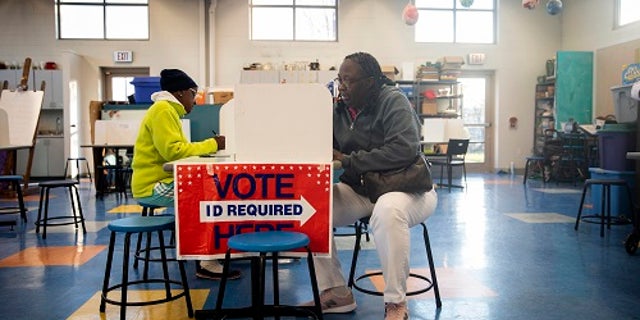
Under New Mexico’s closed system, only voters affiliated with a party can cast a ballot in that party’s primary election. So, independents cannot vote in Democratic or Republican primaries.

Bardacke argues this setup is bad for New Mexico. And he says it is unconstitutional.

Representing four voters from around the state, Bardacke asked the state Supreme Court on Tuesday to strike down New Mexico’s closed primary election system, contending it violates a provision of the state Constitution prohibiting the government from using public funds to benefit private organizations. He argues the public should not have to foot the bill for primary elections if the only people allowed to participate are voters affiliated with private associations.

“They can’t expect the taxpayers to pay for their private primaries,” Bardacke said.

If successful, the case could upend New Mexico politics and ensure an election process that Bardacke and other backers argue would be more inclusive.

But defenders of New Mexico’s closed primary system argue it is only fair. If a voter is not a member of a party, they have no right to pick that party’s candidates, the thinking goes. Forcing a party to accept the ballots of people who are not affiliated with that party would violate the right to freedom of association, proponents have argued.

And New Mexico’s closed primary system — one of nine in the country — has gone in front of the state Supreme Court in the past.

Last year, the court rejected the arguments of one voter who maintained that having to register with a party violated the clause of the New Mexico Constitution establishing free and open elections. The closed primary system did not violate that provision, the court decided.

But the court did not rule out the possibility that the Legislature could set up an open primary system.

And it did not address the crux of this latest case: the state constitution’s anti-donation clause, which says the state cannot spend public funds for the exclusive benefit of a private association, in this case the major parties.

Four voters filed the case: Courtney Chavez and Richard Edwards, both of whom live in Bernalillo County and have declined to select a party on their voter registration; Patrick Lopez, a Republican from Santa Fe; and Gordon Hill, a Democrat from Doña Ana County.

The case names New Mexico’s top election administrator, Secretary of State Maggie Toulouse Oliver, as the respondent.

Without commenting directly on the newly filed case, she reiterated her support for allowing independents to vote in primary elections.

“My office is in the process of reviewing the recently filed lawsuit regarding open primaries in New Mexico but I do support open primaries as they guarantee that every eligible voter has the same opportunity to make his or her voice heard,” Toulouse Oliver said in a statement.

Meanwhile, there is debate over open primaries within the state’s Republican Party, a segment of which has been vehemently opposed to open primaries though the idea appeals to others in the GOP.

It is up to the state’s five-member high court to decide whether to hear the case at all.

The petition does not ask the state Supreme Court to decide what sort of system should replace New Mexico’s closed primary system, instead arguing that decision is up to the Legislature.

Lawmakers have proposed various types of open primaries in recent years, often modeled on other states.

In 2017, state Reps. Stephanie Garcia Richard, D-Los Alamos, and Jim Dines, R-Albuquerque, sponsored a bill that would allow independents and minor-party voters to participate in any of the major-party primary elections.

That same year, Rep. Antonio Maestas, D-Albuquerque, sponsored a bill that would have created a “top-two” primary system in which all voters would select from the same list of candidates. The two candidates with the most votes would advance to the general election.

Neither bill made it out of the committee process to a vote of the full House.

Bardacke said a decision by the state Supreme Court might force the Legislature’s hand.

The timing of the case, Bardacke said, is meant to avoid any confusion about the election that just ended last week while also providing a window of time for the court or legislators to deal with the issue before the next primary election in 2020.

State Sen. Daniel Ivey-Soto, a Democrat from Albuquerque, said he believes the current system is unconstitutional. But part of the problem, he argued, is that the state requires major political parties to use the primary process. Ivey-Soto argued parties should have a choice of holding open or closed primary elections.

On the one hand, Ivey-Soto said, a party’s nominee should be chosen by voters affiliated with that party. But he also acknowledged closed primaries funded by the public may erode the public’s faith in how candidates are selected.

Still, Ivey-Soto noted a primary election is just one of four different routes for a candidate to get on the general election ballot. The real question, he said, is what would replace the entire system for candidates seeking a spot on the ballot.

“I don’t want to depart from the current unconstitutional system for another unconstitutional system,” he said.

Proponents of open primaries have made various arguments about how the process might affect New Mexico’s politics. Some contend, for example, that it could prod candidates to appeal more to moderate voters instead of the bases of their political parties.

The research is not so clear that is the case. A 2013 study published in the American Journal of Political Science found the openness of a primary election has little, if any, effect on the extremism of the politicians it produces.

In any event, Bardacke said that is not the main reason to open up New Mexico’s primary elections. Perhaps it won’t moderate the political discourse, he said, but “it will make the political discourse more robust.”

“These are voters who care enough to register to vote and care enough about their beliefs and ideologies not to blindly associate with one of the major parties,” said Justin Miller, a lawyer working on the case with Bardacke.

The latest midterm election just drew unusually large numbers of New Mexicans to the polls, with around 55 percent of registered voters casting ballots.

But it should not take emergencies and political crises to encourage voters to head to the polls, Miller said.

For Bardacke, opening up primary elections is a matter of getting more voters involved in the process.

“The system,” Bardacke said, “isn’t working.”

Source: US Government Class

DOJ says Whitaker’s appointment as acting attorney general is constitutional

Washington (CNN) – The Justice Department issued a defense of President Donald Trump’s controversial appointment of Matt Whitaker as acting attorney general Wednesday, offering several reasons why the appointment is consistent with the Constitution, federal statutes and past precedent.

Trump lawyers could submit answers to Mueller in coming days, source says
The memo provides a robust legal justification for Whitaker’s right to lead the Justice Department, which includes ultimate oversight authority over special counsel Robert Mueller.
In a 20-page memo addressed to the White House from DOJ’s Office of Legal Counsel — the chief legal interpreter of federal law for the administration — the department concludes that:
* Whitaker’s appointment is consistent with the plain terms of the Vacancies Reform Act, “because he had been serving in the Department of Justice at a sufficiently senior pay level for over a year” as the statute requires.
* Whitaker is only serving on a temporary basis, so he wasn’t required to be confirmed by the Senate ahead of his selection last week, though the Justice Department acknowledged that situation had not come up in over a century. DOJ found that in 1866, a non-Senate confirmed assistant attorney general served as acting attorney general, before the department was founded.
* Even though a separate statute exists that provides a succession plan at the Justice Department, the President can choose someone else consistent with the Vacancies Act.
A senior Justice Department official said Wednesday that prior to Jeff Sessions’ firing last week, the White House requested oral advice on whether the President could designate a senior DOJ official to serve as acting attorney general, but declined to provide details on when exactly that conversation occurred or whether Whitaker was specifically contemplated. The official would only confirm that this written memo is consistent with that oral advice.
The memo comes a day after the state of Maryland challenged Whitaker’s appointment, arguing that Trump wrongfully bypassed the Constitution by appointing Whitaker to replace Sessions and that Deputy Attorney General Rod Rosenstein is Sessions’ rightful successor.
It does not specifically address the questions that have been raised in recent days about whether Whitaker must recuse himself from overseeing Mueller given his past criticisms of the Russia investigation.

Source: US Government Class

Arizona GOP sues to limit mail-in ballots in McSally-Sinema race

CBS News – Republicans filed a lawsuit Wednesday night to challenge the way some Arizona counties count mail-in ballots, as election officials began to slowly tally more than 600,000 outstanding votes in the narrow U.S. Senate race. The task that could take days.

Republican Rep. Martha McSally and Democratic Rep. Kyrsten Sinema were separated by a small fraction of the 1.7 million tabulated votes.

About 75 percent of Arizona voters cast ballots by mail, but those ballots have to go through a signature confirmation process, and only then can be opened and tabulated. If county recorders have issues verifying signatures they are allowed to ask voters to verify their identity.

The suit filed Wednesday by four county Republican parties alleges that the state’s 15 county recorders don’t follow a uniform standard for allowing voters to adjust problems with their mail-in ballots, and that two counties improperly allow those fixes after Election Day.

The GOP complained about the issue before Election Day and threatened to sue. Democrats alleged it was attempted voter suppression and that recorders have followed the same procedures for years with no issues. Republicans said it was about following the law and having a timely ballot count.

The sluggish count is a perennial issue for Arizona, but has rarely received such a high level of attention because the GOP-leaning state generally has had few nationally-watched nail-biting contests.

The lawsuit alleges that signature verification must stop when polls close, and seeks an injunction to stop the counting of such ballots that have been verified after then. It’s unclear how many of these votes still remain outstanding, but the suit singles out the state’s two biggest urban counties, the center of support for Sinema. It says the two counties allow voters to help clear up signature problems up to five days after the election.

Democrats believe the uncounted urban ballots dropped off shortly before Election Day favors Sinema.

The lawsuit is scheduled to be heard Friday, after the next release late Thursday of tallied ballots.

Source: US Government Class

With Redistricting in Mind, Dems’ Midterm Focus Is on States

Real Clear Politics – This year’s midterm races are nearing the finish line and politicos are already looking to 2020, but not all of the future focus is on the next presidential contest. The coming decade will signal another round of the U.S. Census and a chance for states to redraw the lines of congressional districts. Although some liberals have worried aloud that Democrats’ failure to give adequate attention to state races has left them at the mercy of Republican gerrymandering, this cycle’s renewed focus on the local level could begin to turn the tide.

“The Democrats have finally figured out that legislative and governors’ races are more valuable than senators,” said Keith Gaddie, political science professor at the University of Oklahoma. “The best place to put money is in state races.”

The national Democratic Party has been accused of being obsessed with capturing and keeping the White House at the expense of attention on legislative contests and statehouse races. During the Obama years, Democrats lost over 900 legislative seats — the most significant number under any president since World War II.

The timing of many of those losses coincided with the 2010 census, giving Republicans significant control over how the new congressional districts were drawn. Accusations of gerrymandering have led to several legal cases. The Pennsylvania Supreme Court recently agreed the districts in the Keystone State were unfairly partisan and redrew the configurations. Republicans had a 13-5 advantage previously, but with the new map they have almost no advantage.

Democrats insist – and in some cases the courts have agreed – that they aren’t trying to replicate the GOP district lines in reverse, but rather want to fairly represent the politics of a state like Pennsylvania, which is considered a purple battleground in presidential years yet deep red on the House level.

“At the NDRC, we are committed to having fair maps [and] we are supporting an independent commission in these states,” said Patrick Rodenbush, spokesman for the National Democratic Redistricting Committee — a group chaired by former Attorney General Eric Holder. “We want a fair process. … Democrats and progressives will do just fine.”

His group released a video this year featuring President Obama discussing the importance of fairly drawn districts as essential to maintaining democracy. Gerrymandering “means that politicians don’t have to worry as much about a serious challenge from the other side,” said Obama in the video. “That moves our debate from the rational, reasonable middle where most Americans are to the extremes.”

Even if Democrats motives aren’t that pristine, it would take several cycles to achieve that level of control or even make enough gains to try and get to the Republicans’ current levels. Their immediate hope is that they can provide some sort of buffer. For example, if Democrats win the gubernatorial race in Wisconsin, but the legislature remains Republican, the governor can veto any maps he finds unfair.

“Democrats have blocking position and that’s the most realistic outcome in many of these states,” said Michael Li of the Brennan Center at the New York University School of Law. “When you’re talking about extreme gerrymandering — where maps are schemed in favor of one party — [that] only occurs when one party controls all power.”

Looking past the partisan implications, neutral observers believe that uncompetitive congressional districts have contributed to political polarization, incivility in the public square, and gridlock in Washington. In the vast majority of the nation’s 435 districts, Republican members of Congress don’t even need to speak to Democrats back home – and vice versa. Squeezing moderates out also makes political compromise more difficult, along with respectful inter-party discourse.

“It’s helped make the politics a lot nastier,” said Li.

A tougher problem to tackle is how Americans have been segregating themselves geographically for  generations in order to live and work near people who tend to share the same political outlook.

“Because of demographic self-sorting it’s more difficult to draw competitive districts,” said Elaine Kamarck, a fellow at the Brookings Institution. “Rural areas are different from urban areas in some pretty fundamental ways and you can’t always draw a competitive district.”

But Li and other reform-minded experts say that irrespective of self-sorting, the established political duopoly should not be taken off the hook for its history of gerrymandering. “The fact that it’s occurring in battleground states, where it’s the last place you think it would occur, really sort of … discounts a lot of that,” said Li.

So as all eyes focus on the approaching midterms, some groups are already contemplating the next round of elections and hoping that — perhaps based on this year’s results — they will have a chance to redraw the congressional maps. Democrats will most assuredly face a fight from Republicans, however, as they try to regain control and return to fight in states at the local level.

Source: US Government Class