apgov

Rules combatting “dark money” in politics facing growing opposition

A coalition of politically conservative groups and individuals is stepping up opposition to New Mexico Secretary of State Maggie Toulouse Oliver’s proposal to require more transparency on where “independent expenditure” groups get their money.

Former New Mexico Gov. Gary Johnson is the latest to oppose proposed changes in financial disclosure rules, adding his name to a letter from the coalition, which is spearheaded by the Virginia-based Concerned Veterans of America. The group calls Toulouse Oliver’s proposal “an attempt to circumvent the legislative process and silence citizens through executive rule making.”

Since the U.S. Supreme Court’s controversial Citizens United decision in 2010 — which declared unconstitutional laws limiting the amount of money that corporations and unions can spend on political ads — the power of “dark money” groups in elections has soared. While the high court said governments can require disclosure of contributions and expenditures by such groups, many conservatives around the country have resisted disclosure requirements.

“Freedom of association is a bedrock of our society, and your rules, as proposed, threaten this fundamental right,” the July 11 letter says. “Our groups — which represent citizens of New Mexico from all walks of life and across the ideological spectrum — are gravely concerned about the impact of these rules. Specifically, we believe these rules will stifle our ability to freely communicate our ideas and educate citizens across the state on critical public policy issues.”

Under the proposed changes, groups whose primary purpose is making contributions to candidates or making independent political expenditures would be required to register as political committees. Such “independent expenditure” groups — those that aren’t coordinating with a candidate or campaign — would have to report the names, addresses and other information about those who contribute $1,000 or more in an election cycle. Currently, these groups don’t have to report their contributors.

Concerned Veterans is releasing a 15-second web ad Thursday that says, “We fought to defend free speech. But now Secretary of State Maggie Toulouse Oliver is going around elected officials to limit free speech in our state. Tell … Toulouse Oliver to stop attacking free speech.”

The Secretary of State’s Office, responding to recent online ads by the veterans’ group, said claims that the proposal would stop people from participating in politics are false and pointed to polls showing widespread support for more disclosure of campaign financing of independent expenditure groups.

Besides Johnson, the former Republican governor who was the national Libertarian Party’s presidential candidate in 2016 and 2012, others signing the recent letter attacking her proposal include Paul Gessing of the Rio Grande Foundation, a libertarian think tank; Carla Sonntag, president and founder of the New Mexico Business Coalition; Blair Dunn, a partner in Western Agriculture, Resource & Business Advocates and a campaign spokesman for his father, state Land Commissioner Aubrey Dunn.

The Washington Post has reported that Concerned Veterans of America has received significant funding from TC4 Trust, a fund set up by brothers Charles and David Koch, the billionaire industrialists from Wichita, Kan., who are major funders of conservative candidates and causes across the country. Other signers of the letter include officials from other Koch-affiliated groups, including Americans for Prosperity and The Libre Initiative, a conservative Latino organization.

On Tuesday, Toulouse Oliver’s re-election campaign used the Concerned Veterans attack in an appeal for political donations. “The Koch brothers and their PACs are running a targeted smear campaign against me because of my efforts to bring transparency to New Mexico’s campaign finance system,” the campaign said in an email.

In an opinion piece published by The New Mexican this week, Gessing and Bradley Smith, chairman of the Center for Competitive Politics and a former member of the Federal Election Commission, wrote, “Bureaucratic rule-makings can serve an important function. They help to implement and clarify laws that are passed by the Legislature. But here, instead of implementing the law, the Secretary of State’s Office is enacting rules that were rejected in the constitutional lawmaking process.”

Supporters of the changes include New Mexico Common Cause, which for years has pushed legislation calling for similar changes, and the New Mexico League of Women Voters. Judith Williams, president of that organization, said in a recent statement, “We cannot continue elections with so little transparency. … An open, transparent government including the running and financing of political campaigns is key to a healthy democracy. [Toulouse Oliver] has done a good job of interpreting existing laws to arrive at a clear and sensible set of disclosure rules.”

Toulouse Oliver’s proposed rule is based on a bill that passed the Legislature with bipartisan support this year but was vetoed by Gov. Susana Martinez. Martinez wrote in her veto message, “While I support efforts to make our political process more transparent, the broad language in the bill could lead to unintended consequences that would force groups like charities to disclose the names and addresses of their contributors in certain circumstances. The requirements in this bill would likely discourage charities and other groups that are primarily non-political from advocating for their cause and could also discourage individuals from giving to charities.”

The secretary of state’s proposal is part of a larger package of planned regulations dealing with campaign finance.

Toulouse Oliver says the proposed regulations would bring campaign finance rules in line with court decisions in recent years dealing with which groups have to register as political committees and disclose all their donors and expenses.

Meanwhile, Toulouse Oliver announced Tuesday that she is extending the public comment period on the proposed campaign finance rule. The new deadline to submit written comments by mail, email or fax is 5 p.m. Wednesday, July 19.

On Wednesday, her chief of staff, John Blair, said the office had received only 74 letters about the proposed rule — 66 in favor, eight opposed. The Secretary of State’s website also shows more than 60 faxes — all identical — from opponents of the change.

Source: US Government Class

Senate Republicans delay August recess to tackle unfinished agenda

CBS News – Senate Majority Leader Mitch McConnell announced Tuesday that he is canceling the first two weeks of a scheduled August recess in order to tackle the GOP’s unfinished agenda.

“In order to provide more time to complete action on important legislative items and process nominees that have been stalled by a lack of cooperation from our friends across the aisle, the Senate will delay the start of the August recess until the third week of August,” McConnell said in a statement released as he met with the entire conference behind closed doors for lunch.

Congress is typically scheduled to be on break and back in their districts for the entire month of August. The Senate was originally set to leave Washington at the end of this month.

A small but vocal group of Senate Republicans had been calling on McConnell to cancel all or a portion of their recess. The conservative House Freedom Caucus had also called for the cancellation of recess. It’s unclear what this means for the House and if Speaker Paul Ryan, R-Wisconsin, will follow the Senate’s lead.

This comes as Senate Republicans have struggled to coalesce around a plan to repeal and replace Obamacare. McConnell was forced to postpone a vote on their original health care bill before the July 4 recess. Leadership is aiming to release a revamped version before the end of the week with a possible vote next week at the earliest.

Source: US Government Class

California to feds: Pay $18M fire debt or we’ll watch it burn

FoxNews – The head of California’s emergency services on Monday penned a letter to the U.S. Forest Service that raised to prospects that the state may stop protecting national forests during fires.

Emergency Services Director Mark Ghilarducci said the agency has stiffed local governments $18 million for fighting wildfires on federal lands last year.

“I cannot continue to support the deployment of resources to protect federal land that ultimately may bankrupt our local governments,” Ghilarducci said in the letter sent Monday to Forest Service Chief Thomas Tidwell.

Rich Webb, chief of the Linda Fire Protection District, said the federal government’s failure to meet the deadlines was particularly hard on smaller communities that had to push budget shortfalls to the current fiscal year.

Some communities were just recently reimbursed for last summer’s Cedar Fire in Sequoia National Forest and several Northern California counties are still awaiting payments for other fires.

“They’re frustrated to the point where they’re considering not responding to Forest Service fires anymore,” Webb said. “Why participate in this agreement if we’re not being reimbursed? … That’s going to affect the entire mutual aid system throughout the state.”

Nearly half the land in California is federally owned, and the greatest percentage of that is in National Forests. The dispute stems from longstanding commitments that coordinate and reimburse firefighters for work on federal lands.

Wildfires are fought with a combination of local, state and federal firefighters working under mutual aid agreements that often send them hundreds of miles from home. Massive encampments that sprout up at big wildfires include bean counters who tally the costs of fighting fires and figure out how to reimburse the many agencies helping out.

But Ghilarducci said the federal government was shirking its responsibilities to reimburse local governments by illogically relying on a “sudden interpretation” of a 1955 law that prevents the government from paying volunteer firefighters.

More than a third of the state firefighting force is made up of volunteers who expect to be paid when called into action far from home, Ghilarducci said.

It was “appalling and absurd” that the Forest Service had “blatantly ignored its financial responsibility to the men and women of California who have risked their lives fighting fires to protect federal land,” Ghilarducci said.

Messages left seeking comment from the federal agency were not immediately returned.

Char Miller, a professor of environmental analysis at Pomona College who has written extensively about the Forest Service, said it was shocking the federal government had reneged on a longstanding agreement, particularly as fire season heats up and agencies will want to know if they’re going to be repaid.

“It’s troubling where California feels it needs to go public with its disagreement,” Miller said. “It seems to me this is not just a turf war, but a reflection that this very delicate cross-agency, cross-jurisdiction cooperation is fraying at the seams and that’s bad news as the fire season roars away in California.”

Ghilarducci said Forest Service staff refused to cooperate with the state on the matter and had obstructed efforts to honor its commitments.

The federal government is supposed to repay local governments within two months, but more than 90 percent of payments from last year missed that deadline. Two-thirds of payments in 2015 were late.

Miller said there may be a reasonable explanation for the failure to make the payments or it could be a symptom of the Forest Service now spending about half its budget on firefighting and trying to push some of those costs to the state.

But that’s not how the system has worked for much of the past century where agencies have helped each other fight fires that quickly spread across jurisdictional boundaries, he said.

The Associated Press contributed to this report 

Source: US Government Class

Native Americans say grizzly bear decision violates religion

HELENA, Mont. — Native American tribes, clans and leaders from seven states and Canada say the U.S. government’s recent decision to lift protections for grizzly bears in the Yellowstone National Park area violates their religious freedom.

They are suing to block the government from removing Yellowstone grizzlies from the endangered and threatened species list, which would allow Montana, Wyoming and Idaho to hold grizzly bear hunts.

The Native American plaintiffs argue that trophy hunting for grizzly bears goes against their religious and spiritual beliefs. The lawsuit filed June 30 asks a federal judge to rule that the U.S. Fish and Wildlife Service must consider the Native Americans’ beliefs and consult adequately with them before removing grizzly protections that have been in place since 1975.

“He is our relative. For us Bear Clan members, he is our uncle,” Ben Nuvamsa, a former chairman of the Hopi Tribe in Arizona, said Wednesday. “If that bear is removed, that does impact our ceremonies in that there would not be a being, a religious icon that we would know and recognize.”

The three states have not planned any hunts for this year, but have agreed to quotas and to cease all hunting if the Yellowstone population falls below 600 bears. There are now about 700 in the region.

Basing a legal challenge of an Endangered Species Act decision on religious beliefs and inadequate tribal consultation has not been tried before, said the plaintiffs’ attorney, Jeff Rasmussen. It’s an argument that differs from those of the conservation and wildlife advocacy groups who have also filed intentions to sue over last month’s U.S. Fish and Wildlife Service decision.

“They don’t feel like they’ve been listened to, both with regard to their religious beliefs and spiritual beliefs, and with regard to some of the issues in this case,” Rasmussen said. “They feel the U.S. is not listening to them, and we’re hoping to change that.”

U.S. Fish and Wildlife Services and Department of Interior officials declined to comment on the lawsuit. U.S. Department of Justice officials did not return a call or email for comment.

The government began the process of delisting the bears in March 2016 under the Obama administration, and received 650,000 public comments. The Fish and Wildlife Service says on its website it offered an opportunity to government-to-government consultation to 53 tribal governments through letters, phone calls, emails and webinars during that time.

It is government policy to conduct direct consultations with tribes, which are sovereign nations, on Endangered Species Act issues.

The lawsuit alleges that government officials only contacted four tribes initially, and only contacted the others after the decision had been made.

“They promised us that they would consult with us before they made the decision,” Nuvamsa said. “They reneged on it.”

The plaintiffs are 17 tribes, clans and individuals from Montana, South Dakota, North Dakota, Wyoming, Arizona, New Mexico and Canada. Rasmussen said two more tribes from Nebraska and South Dakota are being added.

Copyright 2017 The Associated Press. All rights reserved. This material may not be published, broadcast, rewritten or redistributed.

Save

Save

Source: US Government Class

Federal court blocks Trump EPA on air pollution

Santa Fe New Mexican – WASHINGTON — An appeals court Monday struck down the Environmental Protection Agency’s 90-day suspension of new emission standards on oil and gas wells, a decision that could set back the Trump administration’s broad legal strategy for rolling back Obama-era rules.

In a 2-to-1 ruling, the U.S. Court of Appeals for the District of Columbia Circuit concluded that the EPA had the right to reconsider a 2016 rule limiting methane and smog-forming pollutants emitted by oil and gas wells but could not delay the effective date while it sought to rewrite the regulation.

The agency has proposed extending the initial delay to two years; the court will hold a hearing on that suspension separately.

“The court’s ruling is yet another reminder, now in the context of environmental protection, that the federal judiciary remains a significant obstacle to the president’s desire to order immediate change,” Richard Lazarus, an environmental-law professor at Harvard Law School, said in an email.

“The D.C. Circuit’s ruling today makes clear that neither the president nor his EPA administrator, Scott Pruitt, can by fiat unilaterally and instantaneously repeal or otherwise stay the effectiveness of the environmental protection rules put into place during the Obama administration,” he added.

The court case has been closely watched in New Mexico because of the state’s large but struggling oil and gas industry, which has argued the methane rule would be too costly to implement, and because of a large methane cloud hanging over the Four Corners region. Methane has been linked to climate change and asthma in children and other public health damage.

The industry has been backed by Republican Gov. Susana Martinez, whose public career has benefitted greatly from the financial backing of oil and gas interests. Supporters of the methane rule include the state’s two U.S. senators, Tom Udall and Martin Heinrich, both Democrats.

The EPA, along with the American Petroleum Institute, had argued that the stay Pruitt imposed last month was not subject to judicial review, because it did not constitute final action on the rule. In a recent interview with The Washington Post, Pruitt said, “Just because you provide a time for implementation or compliance that’s longer doesn’t mean that you’re going to necessarily reverse or redirect the rule.”

But the court rejected that interpretation, writing, “EPA’s stay, in other words, is essentially an order delaying the rule’s effective date, and this court has held that such orders are tantamount to amending or revoking a rule.”

The ruling could affect myriad agencies that have delayed the Obama administration’s regulations, some for long periods. And it underscores the extent to which activists are turning to the courts to block President Donald Trump’s most ambitious policy shifts.

Last month, for example, the Interior Department announced that it would delay compliance with a rule finalized in November that would limit methane burned off from drilling operations on federal and tribal lands. And the Labor Department just proposed delaying until December a rule that was set to take effect July 1 that would require companies to electronically report injuries and illnesses.

“The court says you can consider changing the rules but you have to do it the normal way, with a comment period,” said David Doniger, director of the climate and clean-air program at the Natural Resources Defense Council. “You can’t yank it out of existence on your say-so.”

Lazarus added, “Changing the rules midstream can occur only after a thorough administrative review, including public notice and opportunity to comment, that ensures that there are good reasons for the change, backed up by sound policy and science.”

EPA spokeswoman Amy Graham said in an email that the agency was “reviewing the opinion and examining our options” in light of the decision.

The rule the EPA had sought to suspend had imposed the first-ever federal limits on leaks of methane, a potent greenhouse gas, from oil and natural-gas wells. It applied only to new or modified wells. The agency had previously projected that the rule would prevent 11 million metric tons of carbon-dioxide-equivalent emissions by 2025. Doniger said it would, so far, apply to about 11,000 wells drilled since September 2015.

Many of the industry’s largest companies have been working with the Environmental Defense Fund to measure leakage through the natural-gas system, including wells, pipelines, power plants and homes. The EDF said that reducing leaks would keep large quantities of smog-forming volatile organic compounds, cancer-causing benzene, and methane from being emitted into the air.

Pruitt has moved to suspend or revoke several other rules adopted during the Obama administration, including a two-year delay on a regulation aimed at minimizing chemical accidents like the 2013 ammonium nitrate explosion at a plant in West, Tex.

Monday’s court ruling was sharply worded at points, with the judges dismissing “the flimsiness” of the EPA’s “claim that regulated entities had no opportunity to comment” on one aspect of the methane rule.

“The administrative record thus makes clear that industry groups had ample opportunity to comment on all four issues on which EPA granted reconsideration, and indeed, that in several instances the agency incorporated those comments directly into the final rule,” the judges wrote.

Reid Porter, a spokesman for the American Petroleum Institute, said in an email that the suspension of the rule would have allowed for “regulatory certainty” and that an EPA report in March concluded that methane emissions from petroleum production had already declined roughly 8 percent from 2014 levels.

“API supports revision of the 2016 New Source Performance Standards, and we are hopeful that the eventual outcome recognizes the science, allowing for revisions to the flawed rule,” Porter said.

Even as one aspect of the administration’s push to promote domestic energy production faced a legal setback Monday, it advanced on a separate front. The Interior Department launched a new offshore-leasing planning process for 2019 to 2024, a move that could open up new areas for drilling in the Arctic, Atlantic and Pacific oceans, as well as the Gulf of Mexico.

In a Federal Register notice published Friday, the Interior Department invited public comment on a plan that would “replace the 2017-2022 Program” established during the Obama administration and represent “a key aspect of the implementation of President Donald J. Trump’s America-First Offshore Energy Strategy.”

Source: US Government Class

When is the real Independence Day: July 2 or July 4?

Constitution Center – There’s no doubt the Founding Fathers signed the Declaration of Independence in July 1776. But which date has the legitimate claim on Independence Day: July 2 or July 4?

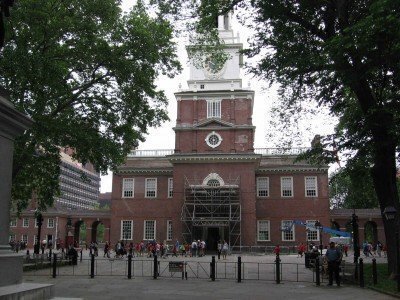
indhall1If John Adams were alive today, he would tell you July 2nd. Other Founders would say July 4th, the day that is currently recognized as a federal holiday by our national government. And still other Founders would say, “what Independence Day?” since the holiday wasn’t widely celebrated until many of the Founders had passed away.

Here is the evidence, so you can decide which Independence Day is really Independence Day!

Officially, the Continental Congress declared its freedom from Britain on July 2, 1776, when it approved a resolution and delegates from New York were given permission to make it a unanimous vote.

John Adams thought July 2 would be marked as a national holiday for generations to come.

“The most memorable Epocha, in the History of America. I am apt to believe that it will be celebrated, by succeeding Generations, as the great anniversary Festival… It ought to be solemnized with Pomp and Parade with shews, Games, Sports, Guns, Bells, Bonfires and Illuminations from one End of this continent to the other from this Time forward forever more,” Adams said about what he envisioned as a July 2nd national holiday.

After voting on independence on July 2, the Continental Congress needed to draft a document explaining the move to the public. It had been proposed in draft form by the Committee of Five (John Adams, Roger Sherman, Robert Livingston, Benjamin Franklin and Thomas Jefferson) and it took two days for the Congress to agree on the edits.

Once the Congress approved the actual Declaration on Independence document on July 4, it ordered that it be sent to a printer named John Dunlap. About 200 copies of the Dunlap Broadside were printed, with John Hancock’s name printed at the bottom. Today, 26 copies remain.

That is why the Declaration has the words, “IN CONGRESS, July 4, 1776,” at its top, because that is the day the approved last version was signed in Philadelphia.

On July 8, 1776, Colonel John Nixon of Philadelphia read a printed Declaration of Independence to the public for the first time on what is now called Independence Square.

(Most of the members of the Continental Congress signed a version of the Declaration on August 2, 1776 in Philadelphia. The names of the signers were released publicly in early 1777. So that famous painting showing the signing of the Declaration on July 4, 1776 is a bit of an exaggeration.)

The late historian Pauline Maier said in her 1997 book about the Declaration that no member of Congress recalled in early July 1777 that it was almost a year since they declared their freedom from the British. They finally remembered the event on July 3, 1777, and July 4th became the day that seemed to make sense for celebrating independence.

Maier also said that the Declaration (and celebrating its signing) was stuck in an early feud between the Federalists (of John Adams) and the Republicans (of Thomas Jefferson).  The Declaration and its anniversary day weren’t widely celebrated until the Federalists faded away from the political scene after 1812.

In 1870, Independence Day was made an unpaid holiday for federal employees. In 1941, Congress made it a paid holiday for them.

In the last letter he ever wrote, Thomas Jefferson spoke in 1826 of the importance of the day. “For ourselves, let the annual return of this day forever refresh our recollections of these rights, and an undiminished devotion to them,” he said.

Two days later, Jefferson and Adams both passed away on the Fourth of July.

Scott Bomboy is the editor in chief of the National Constitution Center.

Source: US Government Class

Kucinich rips Dems for proposal to examine Trump’s mental fitness

FoxNews – Dennis Kucinich, the former Democratic congressman and presidential candidate, blasted his party colleagues on Tuesday over a push to examine President Trump’s mental and physical fitness for office – and potentially use the findings to seek his removal.

The campaign is being led by Rep. Jamie Raskin, D-Md., who has tried to rally support for his bill in the wake of Trump’s controversial attacks on various media outlets and personalities.

But Kucinich told “Fox & Friends” that Democrats aren’t doing the party any favors with proposals like this.

“It’s a political statement, not a medical statement,” said Kucinich, a Fox News contributor. “I think it’s destroying the party as an effective opposition.”

He continued, “People want political parties to be focused on America’s economic needs, jobs, wages, heath care, education, retirement security and peace — and they want American politicians to be constructive, not destructive.”

Kucinich speculated that some in his party are having a tough time trying to “reconcile” the results of the November election with their own politics but called for lawmakers to find common ground.

DEMS MAKE EARLY CALLS FOR IMPEACHMENT

“What’s happening here is not good for the country,” Kucinich said.

The bill in question would establish an “Oversight Commission on Presidential Capacity,” tasked with carrying out a “medical examination of the President to determine whether the President is mentally or physically unable to discharge the powers and duties of the office.” Under the bill, this determination could be made if the “Commission finds that the President is temporarily or permanently impaired by physical illness or disability, mental illness, mental deficiency, or alcohol or drug use to the extent that the person lacks sufficient understanding or capacity to execute the powers and duties of the office of President.”

The bill cites the 25th Amendment, which states the vice president shall assume the powers of the presidency when the president is declared “unable to discharge the powers and duties of his office.”

The same section, though, makes clear that the vice president and others would need to sign off on such a decision – which could speak to why Kucinich and other critics view this as a purely symbolic effort.

Raskin introduced the bill in April, but revived the push amid the controversy over Trump’s attacks on the media, including CNN and the hosts of MSNBC’s “Morning Joe.”

“The President should take a break from watching TV and read the #25thAmendment to the Constitution. There are ways out of this,” Raskin tweeted on Friday.

The bill has nearly two-dozen cosponsors, including former Democratic Party leader Debbie Wasserman Schultz.

Source: US Government Class

UW study finds Seattle’s minimum wage is costing jobs

Seattle Times – Seattle’s minimum-wage law is boosting wages for a range of low-paid workers, but the law is causing those workers as a group to lose hours, and it’s also costing jobs, according to the latest study on the measure passed by the City Council in 2014.

The report, by members of the University of Washington team studying the law’s impacts for the city of Seattle, is being published Monday as a working paper by a nonprofit think tank, the National Bureau of Economic Research.

That law raises Seattle’s minimum wage gradually until it reaches $15 for all by 2021.

The UW team published its first reportlast July on the impact of the first jump in Seattle’s minimum wage, which went in April 2015 from $9.47 to $10 or $11 an hour, depending on business size, benefits and tips.

Save over 90% on select subscriptions.

This latest study from the UW team looks at the effects of both the first and second jumps. The second jump, in January 2016, raised the minimum wage to $10.50 to $13. (The minimum wage has since gone up again, to the current $11 to $15. It goes up again in January to $11.50 to $15.)

The team concluded that the second jump had a far greater impact, boosting pay in low-wage jobs by about 3 percent since 2014 but also resulting in a 9 percent reduction in hours worked in such jobs. That resulted in a 6 percent drop in what employers collectively pay — and what workers earn — for those low-wage jobs.

For an average low-wage worker in Seattle, that translates into a loss of about $125 per month per job.

“If you’re a low-skilled worker with one of those jobs, $125 a month is a sizable amount of money,” said Mark Long, a UW public-policy professor and one of the authors of the report. “It can be the difference between being able to pay your rent and not being able to pay your rent.”

The report also estimated that there are about 5,000 fewer low-wage jobs in the city than there would have been without the law.

Seattle Mayor Ed Murray defended the minimum wage law, saying that “businesses across the city are competing for employees and our city is in the midst of a period of nearly unprecedented growth. Raising the minimum wage helps ensure more people who live and work in Seattle can share in our city’s success, and helps fight income inequality.”

The mayor’s office sent a letter to the UW researchers, saying it had concerns about their conclusion and about whether they over-generalized, given the limits of their methodology.

In its report, the UW researchers focused on “low wage” jobs — those paying under $19 an hour — and not just “minimum wage” jobs, to account for the spillover effect of employers raising the pay of those making more than minimum wage.

For instance, an employer who raised the pay of the lowest-paid workers to $13 from $11 may have then given those making $14 a boost to $14.50. (The team had also tested lower- and higher-wage thresholds for the study, and the results did not change, members said.)

To try to isolate the effects of the minimum-wage law from other factors, the UW team built a “synthetic” Seattle statistical model, aggregating areas outside King County but within the state that had previously shown numbers and trends similar to Seattle’s labor market.

The researchers then compared what happened in the real Seattle from June 2014 through September 2016 to what happened in the synthetic Seattle.

In addition to earnings, the report analyzes data on work hours— relatively rare in minimum-wage studies, the researchers said, since Washington is one of only four states that collects quarterly data on both hours and earnings.

Other studies on minimum wage have typically used lower-wage industries, such as the restaurant sector, or lower-paid groups such as teenagers, as proxies to get at employment, they said.

That was the case with a University of California, Berkeley study released last week that found Seattle’s minimum-wage law led to higher pay for restaurant workers without costing jobs in 2015 and 2016.

The UW team’s study actually corroborates the Berkeley conclusion, finding zero impact from the minimum-wage law on restaurant employment — when taking into account jobs at all wage levels within the restaurant industry.

But the UW researchers did conclude that, for low-wage restaurant workers, the law cost them work hours. (Specifically, though the actual number of hours worked by low-wage restaurant workers in Seattle increased a slight 0.1 percent from the second quarters of 2014 to 2016, the researchers’ “synthetic Seattle” model showed that if the minimum wage law hadn’t been in effect, there would have been an 11.1 percent increase in hours for those workers.)

Michael Reich, a UC Berkeley economics professor who was lead author on the Berkeley report, said he found the UW team’s report not credible for a number of reasons.

He said the UW researchers’ “synthetic” Seattle model draws only from areas in Washington that are nothing like Seattle, and the report excludes multisite businesses, which employ a large percentage of Seattle’s low-paid workforce. The latter fact was also problematic, he said, because that meant workers who left single-site businesses to work at multisite businesses were counted as job losses, not job gains in the UW study.

Reich also thought the $19 threshold was too low, and he said the UW researchers’ report “finds an unprecedented impact of wage increases on jobs, ten times more than in hundreds of minimum wage and non-minimum wage studies. … “There is no reason,” he said, that Seattle’s employers of low-paid workers “should be so much more sensitive to wage increases.”

Reich and economists at the left-leaning Economic Policy Institute also criticized the report as not properly accounting for Seattle’s economic boom, which they say is causing the shift from lower-paid to higher-paid jobs.

Jacob Vigdor, a UW public policy professor and one of the authors of the UW report, stood by the team’s findings.

He said the team assessed the economic boom as an “alternative hypothesis” but that that explanation wouldn’t explain why the big drop in employment effects were “statistically invisible” until January 2016 when the second jump in the minimum wage occurred.

“There’s nothing in our data to support the idea that Seattle was in economic doldrums through the end of 2015, only to experience an incredible boom in winter 2016,” he said.

As to the criticisms of the team’s methodology, “when we perform the exact same analysis as the Berkeley team, we match their results, which is inconsistent with the notion that our methods create bias,” Vigdor said.

As to the substantial impact on jobs that the UW researchers found, Vigdor said: “We are concerned that it is flaws in prior studies … that have masked these responses. The fact that we find zero employment effects when using methods common in prior studies — just as those studies do — amplifies these concerns.”

He added that “Seattle’s substantial minimum-wage increase — a 37 percent rise over nine months on top of what was then the nation’s highest state minimum wage — may have induced a stronger response than the events studied in prior research.”

As to how the UW team’s findings jibe with the Seattle area’s very low unemployment rate, tight labor market, and anecdotes from hospitality employers desperately seeking low-wage workers, Vigdor said that, based on data and what he’s hearing from employers, businesses are looking to hire those with more experience.

“Traditionally, a high proportion of workers in the low-wage market are not experienced at all: teens with their first jobs, immigrants with their first jobs here,” he said. “Data is pointing to: Since we have to pay more, employers are looking for people with experience who can do the job from Day 1.”

This story has been corrected to say the minimum wage law was passed by the City Council in 2014.

Source: US Government Class

U.S. high court voids N.M. ruling on textbook funding

Santa Fe New Mexican – The U.S. Supreme Court on Tuesday ordered New Mexico’s highest court to reconsider whether state money can be used to pay for textbooks at religious and other private schools.

In ordering the reconsideration, the justices vacated a 2015 decision by the state Supreme Court, which ruled that providing public funds for textbooks in private schools violated the New Mexico Constitution. The constitution prohibits education funds from being “used for the support of any sectarian, denominational or private school, college or university.”

The U.S. Supreme Court order in the New Mexico case came a day after the justices ruled that the state of Missouri could not deny a grant to a church for playground improvements simply because it was a religious institution. The Supreme Court cited its ruling in that case in directing New Mexico’s justices to revisit the textbook issue.

Prior to the New Mexico Supreme Court ruling in the textbook case, the state was providing more than $1 million a year for textbooks in private schools.

The case began in 2012 when two parents of public school students — Cathy “Cate” Moses of Santa Fe and Paul Weinbaum of Las Cruces — sued the state, saying its practice of using federal dollars to pay for textbooks at private schools took money away from students in public schools.

The Becket Fund for Religious Liberty, an advocacy group, asked the U.S. Supreme Court to overrule the decision by the New Mexico justices, arguing that denying funding for textbooks in religious schools violates the federal Constitution’s guarantees of freedom of religion and equal protection.

The U.S. Supreme Court did not hear the New Mexico case. But the court’s ruling about the government grant for the church in Missouri seemed to upend some of the arguments against providing public funds to religious institutions.

That case — Trinity Lutheran Church of Columbia Inc. v. Comer — centered on a church that sought to resurface a large portion of its playground by replacing pea gravel with a rubber surface made from recycled tires. To pay for the project, the church applied for a grant from a tire-recycling program run by the state. But the Missouri government denied the church’s application, pointing to a section of the state constitution prohibiting public financial support for a church.

Reversing lower-court decisions, the U.S. Supreme Court ruled the state’s policy violated the church’s rights by denying an otherwise available public benefit only because of its religious status.

“The court made it clear you can’t be excluded from generally available government programs because of your faith,” said Eric Baxter, general counsel at the Becket Fund.

Frank Susman, a Santa Fe attorney representing Moses and Weinbaum, said New Mexico’s decision against textbooks for private schools should stand because it does not have anything to do with religion. Various articles in the New Mexico Constitution say public entities are prohibited from providing any kind of financial support to private institutions regardless of whether those groups are secular or religious, he said.

“Other constitutional mandates would also prohibit it and do not mention churches,” he said.

The Public Education Department has stayed out of the dispute, deciding instead to accept the ruling of the New Mexico Supreme Court and stop providing federal funds to private schools.

A spokeswoman for the department did not respond to a request for comment Tuesday.

The New Mexico Supreme Court’s next steps are unclear. Its justices will meet after they receive the U.S. Supreme Court’s order and decide how to proceed with the case, which could involve calling for more written arguments from the lawyers involved or scheduling another hearing.

Contact Robert Nott at 505-986-3021 or rnott@sfnewmexican.com. Contact Andrew Oxford at 505-986-3093 or aoxford@sfnewmexican.com.

Source: US Government Class