apgov

Sanders’ single-payer plan pits 2020 hopefuls against Dem leaders

FoxNews – Sen. Bernie Sanders on Wednesday will officially unveil his single-payer health care bill, exposing tensions in the Democratic Party as 2020 presidential hopefuls rally behind the plan yet congressional leaders hold back support.

The “Medicare for All” plan from Sanders, a Vermont independent and sage of the American political left, is backed by 15 co-sponsors.

The list, unveiled Wednesday morning, includes several Democratic senators thought to be eyeing a 2020 White House bid — Elizabeth Warren, of Massachusetts; Kamal Harris, of California; Cory Booker, of New Jersey; and Kirsten Gillibrand, of New York.

However, the top two Democrats on Capitol Hill — Senate Minority Leader Chuck Schumer and House Minority Leader Nancy Pelosi — are not endorsing the plan right now.

WHAT IS SINGLE-PAYER HEALTH CARE? 

Both essentially say they have a more immediate concern of fixing ObamaCare and remain open to a range of long-term solutions toward improving the country’s health care system.

Pelosi, of California, told The Washington Post that she and others “embrace” any plan that provides affordable, accessible care to all Americans but “none of these things, whether it’s Bernie’s or others, can really prevail unless we protect the Affordable Care Act.”

Schumer, of New York, recently said he’ll be reviewing the “many good” proposals from Democrats on improving and expanding health care coverage, according to Politico.

Sanders is calling for a federally run program that would provide Americans with no-cost, comprehensive health insurance — covering everything from preventive care to prescription medications to eye examinations.

The Associated Press reports that the new legislation would let Americans get coverage simply by showing a government-issued card, and ensure they don’t owe out-of-pocket expenses.

Unclear is how much the bill would cost.

The 2016 Democratic presidential candidate and self-described democratic socialist pitched a previous version of the plan by proposing to cover costs with tax increases on businesses and the country’s highest wage-earners.

At the time, he estimated the plan would cost $13.8 trillion over the first 10 years. But according to an analysis by the nonpartisan Urban Institute, the single-payer system would cost the federal government more like $32 trillion over the first decade, requiring an average annual tax increase of $24,000 per household. (That increase would be offset in part by a big reduction in private health care spending, and state/local government spending.)

Sanders’ office has said the new proposal is different.

The battle-lines between Democrats on the issue appear to extend the disagreements from the 2016 race for the Democratic presidential nomination between Sanders and Hillary Clinton.

Progressive like Harris and Warren are backing the Sanders plan while some in the Democratic establishment appear unwilling to support legislation that dramatically increases taxes and puts the government in control of the country’s health care system.

Still, Pelosi insisted that the single-payer issue is not a “litmus test” for Democrats.

The legislation has little chance of passing in the GOP-controlled Congress.

On Tuesday, the National Republican Senatorial Committee bashed Wisconsin Democrat Sen. Tammy Baldwin, who seeking reelection in 2018, for supporting the plan.

“After suffering through the disastrous results of ObamaCare … folks in Wisconsin deserve to know why Tammy Baldwin is putting them at risk to support the left’s radical plans for government-run health care,” said NRSC spokeswoman Katie Martin.

A similar plan failed this summer in California, among the country’s most liberal states, when House Speaker Anthony Rendon shelved the Senate-approved $400 billion proposal, arguing it had no funding plan.

The Sanders plan is being unveiled as Republicans try again Wednesday to pitch an ObamaCare fix. GOP Sens. Lindsey Graham, of South Carolina, and Bill Cassidy, of Louisiana, are set Wednesday to unveil a bill after several failed efforts to overhaul the Affordable Care Act.

The plan would convert billions in federal money spent on individual insurance subsidies and Medicaid expansion through ObamaCare into block grants for states.

Source: US Government Class

Kobach challenges ‘legitimacy’ of New Hampshire’s 2016 election, after out-of-state voter report

FoxNews – Members of President Trump’s election integrity commission clashed Tuesday over new claims that thousands of out-of-state voters may have swung last year’s election in New Hampshire in Democrats’ favor.

With the Presidential Advisory Commission on Election Integrity holding its second meeting in New Hampshire, the allegations took center stage.

Co-chairman Kris Kobach, Missouri’s Republican secretary of state, challenged the “legitimacy” of last year’s blockbuster Senate election in New Hampshire.

New Hampshire’s longtime Secretary of State Bill Gardner, a Democrat, fired back, saying the results were “real and valid.”

The session at the New Hampshire Institute of Politics came less than a week after Kobach charged in a column on Breitbart.com that voter fraud in the Granite State may account for Democrat Maggie Hassan’s narrow Senate victory last November over incumbent Republican Kelly Ayotte.

Kobach cited a report compiled by Gardner and released by Republican state House Speaker Shawn Jasper. The report – which some Republicans say could raise questions about Hillary Clinton’s narrow win over Donald Trump in the state — showed that more than 5,000 people who registered to vote last November using out-of-state driver’s licenses never subsequently obtained in-state licenses or registered their cars in the state.

In his article, which was heavily criticized by Democrats, Kobach suggested that the data was proof voter fraud likely led to Hassan’s 1,017-vote victory over Ayotte out of nearly three-quarters of a million ballots cast.

The state’s laws allow a person – for instance, a college student – to be domiciled in New Hampshire for voting purposes and still be a resident of another state for driver’s licensing purposes. But state law also requires that people who come to live in the state and have a vehicle register it and obtain a New Hampshire driver’s license within 60 days.

Kobach charged that “until further research is done … we will never know the answer regarding the legitimacy of that particular election.”

Countering Kobach, Gardner said “the problem that has occurred because of what you wrote is that the question of whether our election as we recorded it is real and valid. And it is real and valid.”

Gardner pleaded that “we all need to stay focused on” the marching orders from Vice President Pence, the commission’s chairman, that “we work in a way that we don’t have preconceived, preordained ideas of what the facts are going to turn out to be.”

Maine Secretary of State Matthew Dunlap, another commission member, also criticized Kobach, calling his voter fraud allegations “reckless.”

President Trump lost New Hampshire’s four electoral votes last November to Democratic presidential nominee Clinton by fewer than 2,800 votes.

While Trump trounced Clinton in the all-important Electoral College vote, 306 to 232, to win the presidency, he also lost the national popular count by nearly 3 million votes to Clinton.

Soon after his victory, Trump claimed he would have won the popular vote “if you deduct the millions of people who voted illegally.” And he singled out New Hampshire as one of three states with “serious voter fraud.”

Democrats argue the commission is a voter suppression effort led by Trump to justify his voter fraud claims. Top New Hampshire Democrats have urged Gardner, who has served more than four decades as secretary of state, to quit the commission.

Gardner referenced the incoming fire he’s taken in recent days, saying in his opening comments that “some have questioned why I am here.”

After highlighting the state’s rich political history, he added that “New Hampshire people aren’t accustomed to walking away or stepping down from their civic duty and I will not either.”

But the commission’s role came under attack during a protest outside the New Hampshire Institute of Politics prior to the start of the meeting.

“The commission should not exist,” said Jason Kander, the former Missouri secretary of state who now heads Let America Vote, a new nonprofit group that works to increase voter participation.

Kander, who ran unsuccessfully as a Democrat for U.S. Senate last year, told demonstrators that Trump’s allegations of voter fraud are “the biggest lie a president has ever told.”

Source: US Government Class

In free-range Trump, many see potential for a third party

In the minds of many, however, it’s grown too full, and badly needs an excision. Now more than at any point in its modern history, the party has reached such a breaking point that historians, political analysts and Republicans themselves say it faces the possibility of splintering and spawning a third party.

“We haven’t lanced the boil,” Stephen Bannon, President Donald Trump’s former chief strategist, said in an interview, evoking the swelling tensions between the anti-establishment agitators like himself, who mostly align with Trump, and the party’s ruling class in Washington, which seems to grow more mistrustful of the president by the day.

“They all thought they were going to lance the boil the day after the election, when they had the catastrophic Trump defeat,” Bannon added. “And that’s when all accounts would be settled.”

Instead, Trump’s election has continued to vex his party. The partnership and cooperation that would ordinarily flow from one-party control in Washington are virtually nonexistent, leaving the president and his party with very few legislative victories so far. And his lack of political loyalty or ideological mooring — he stunned Republicans by striking a short-term fiscal deal with Democrats last week — has left Washington guessing about which new alliance or policy U-turn might come next.

But for all the uncertainty Trump has sown, he has accomplished something that could prove defining for the country’s 200-year-old two-party system: He is clearing an opening, intentionally or not, for a new party.

Michael Beschloss, the presidential historian, said the conditions were so ripe for a split, “I’ve been startled that this has not happened.”

As a political neophyte and former Democrat who was resisted throughout the primaries by the Republican establishment, Trump put to rest the conventional notion that presidential nominees need the blessing of their party’s power brokers to win. Now, Beschloss said, “entry is very easy.”

“Basically, all you need are money, TV, communications and an issue,” he added.

To be sure, the barriers to creating a relevant third party are high and long-standing. But the nationalistic, conservative populist agenda that Trump ran on has wealthy patrons like the Mercer family, the software billionaires, and Peter Thiel, the Silicon Valley entrepreneur. They have told friends and associates that they are committed to seeing the movement that Trump ignited live on.

“People in Washington in the political establishment who think we’ll get rid of Trump and go back to normal have made a terrible miscalculation. That’s not going to happen,” said Patrick Caddell, a political strategist who has worked for Democrats for most of his career and has warned that a breakup of the Republican Party is only a matter of time.

“The paradigm shift that we went through in 2016, it’s still in motion,” Caddell added.

Even with his historically low approval ratings, Trump is redefining what it means to be a loyal Republican. His antagonism, born of frustration over his stalled agenda, of the top two Republicans in Congress, Speaker Paul Ryan and Sen. Mitch McConnell, R-Ky., the majority leader, is exacerbating the rifts between leadership-friendly Republicans and more anti-establishment renegades.

“Before Trump, I saw the ongoing battle between what I would call the pragmatic governing wing and the purists — that was the litmus test issue,” said Rep. Charlie Dent, R-Pa., who announced last week that he was retiring, in part because he was fed up with the gridlock and infighting in Congress.

“Now, since Trump,” Dent added, “the issue has become, more or less, Trump loyalty.”

Rep. Dave Brat, R-Va., who unseated Eric Cantor, the No. 2 House Republican, in 2014, said the rise of anti-establishment figures like Trump on the right and Sen. Bernie Sanders on the left showed the desire for disruption in both parties. But that disruption has been slow going in Congress, much to the irritation of voters who have little loyalty to the Democratic or Republican brands.

“That is the new movement — Bernie through Trump,” Brat said. “It hasn’t permeated Congress, and that’s why everybody is ticked.”

For all practical purposes, neither Ryan nor McConnell has a functioning majority they can count on to pass legislation, as has been vividly illustrated by the failure to fulfill long-standing vows to repeal the Affordable Care Act. And Republicans said they expected that opposition to party leaders would become the new test for candidates in the primary fights before the 2018 midterm elections.

“I think people underestimate the extent to which the Republican Party could be in full-blown civil war by March or April of next year,” said Bill Kristol, editor-at-large of The Weekly Standard.

“It could become a crystallizing moment,” Kristol added.

Complicating matters even further, Trump has given Congress a deadline of early next year to come up with a fix for the order he rescinded last week that protected young unauthorized immigrants from deportation. Bannon, in an interview with “60 Minutes” that aired Sunday, said he believed the issue would be one more factor pushing Republicans toward a tipping point.

“I’m worried about losing the House now because of this,” he said. “And my fear,” he added, “in February and March it will be a civil war inside the Republican Party.”

Opinions on Trump have changed less than his low overall popularity might suggest. Ninety-eight percent of Republicans who supported him in the 2016 primaries still approve of him today, according to a Wall Street Journal/NBC News poll released last week. Among Republicans who voted for another candidate in the primaries, his approval rating is 66 percent.

Given Trump’s mercurial nature, few Republicans will guess whether he can remain a viable leader of a movement that is fundamentally conservative in many ways, most notably its hostility toward large-scale immigration.

The most significant thing about Trump’s spending-and-debt deal with Democrats may not be that he revealed any hidden liberal leanings, but that he undermined his already weakened political party, one that has long been an uneasy amalgam of business-oriented elites and the more rural, religious grass roots.

“He’s a free-range chicken,” said Michael Steele, a former chairman of the Republican National Committee. “And he’s out there on the range playing with whomever he wants.”

Source: US Government Class

Supreme Court Justice Kennedy blocks part of 9th Circuit ruling on travel ban

CBS News – Supreme Court Justice Anthony Kennedy has issued a temporary order allowing the Trump administration to maintain its restrictive policy on refugees for the time being.

Justice Kennedy has temporarily put on hold part of federal appeals court ruling last week that had narrowed President’s Trump’s travel ban, CBS News Chief Legal Correspondent Jan Crawford reports. In a brief order, Kennedy granted the administration’s request to block the 9th Circuit’s ruling that the ban wouldn’t cover refugees working with U.S. refugee agencies or with formal assurances from resettlement organizations.

The 9th Circuit ruling could have allowed up to 24,000 refugees to enter the United States.

Kennedy ordered challengers to the administration’s refugee ban to submit written arguments in support of the lower court ruling by midday Tuesday.

The appellate ruling would allow refugees to enter the United States if a resettlement agency in the U.S. had agreed to take them in. The ruling would have taken effect Tuesday without the high court’s intervention.

The administration did not ask the justices to immediately stay another part of the 9th Circuit’s decision — namely, that grandparents are not covered, Crawford noted.

The justices will hear arguments on this on Oct. 10.

Source: US Government Class

Police response to Entrada raises questions about city’s handling of protest

Santa Fe New Mexican – Police looked down from nearby rooftops and law enforcement from around the state stood by as backup while officers herded a crowd of several dozen demonstrators Friday into a “free speech zone” on one edge of Santa Fe’s landmark Plaza.

As the annual Fiesta de Santa Fe event known as the Entrada ended, amid protests by activists who charge it’s a racist depiction of Santa Fe’s colonial history, police arrested several people on nonviolent charges, part of a heavy response that raised questions about how the city is handling an escalating controversy and prompted hints of legal action in response.

The Santa Fe Police Department’s designated spokesman said around 5 p.m. Friday that officers had arrested about a dozen people, though he did not know exactly how many, who or on what charges. Jail records showed at least eight people booked on charges of trespassing as well as one person also accused of disorderly conduct. All remained in custody as of Friday night, and a lawyer said they might not get to see a judge and be released until Sunday morning.

“From what I’m hearing, it sounds like these folks were simply out exercising their First Amendment right to freedom of expression,” said Dan Cron, a local attorney who has helped organize a team of lawyers to represent arrested protesters for free.

Cron said he had not heard any reports of violence by protesters.

Last year’s Entrada also drew protesters, a few of whom carried megaphones or wore masks, though police did not arrest anyone.

Cron was not the only one who raised concerns about how police handled this year’s protest, which turned into an impromptu march through downtown streets.

The day before the Entrada, city officials said organizers of the Fiesta event had asked police to ban from the Plaza megaphones, laser pointers, masks, gang colors, weapons, toy guns and water guns. And throughout the event, police admonished protesters against wearing bandannas over their faces.

Cron said he heard reports that officers arrested a man who witnesses saw walking away from the protests. Police accused him of trespassing for wearing a bandanna over his forehead, though he was not concealing the rest of his face.

In a letter faxed to Police Chief Patrick Gallagher on Friday, the ACLU of New Mexico said the city’s “sweeping restrictions raise serious constitutional concerns under the First Amendment.”

The letter, signed by staff attorney Kristin Greer Love, warned that the city would be “exposed to civil liability” if it enforces unconstitutional restrictions on free expression or violates the First Amendment rights of Fiesta attendees.

Santa Fe Police Department spokesman Greg Gurulé said police were enforcing the will of the Fiesta Council, the nonprofit organization that the city annually grants a permit to put on the festivities on the Plaza park and adjoining streets. “It’s their event, it’s their Plaza,” he said. “So they can make the rules.”

Gurule said officers decided to move demonstrators off the Plaza because “allowing the protest would be against what the Fiesta Council is trying to do.”

“Others come to this event to enjoy Fiestas …” Gurulé said. “We’re clearing them out of the way so those people can actually get onto the street and so they can go and enjoy the event.”

After the re-enactment, police cordoned off more than two dozen protesters at East Palace Avenue and Washington Avenue, where about the same number police stood behind metal barriers, preventing demonstrators from entering the Plaza. By late afternoon, a woman was leading chants over a bullhorn, one of the items that the city said were prohibited on the Plaza during the event.

“No pride in genocide!” came one chant.

Protesters turned up Washington Avenue and marched around toward Marcy Street and Lincoln Avenue, near City Hall.

There, police again blocked the protest and officers snatched one of the demonstration’s organizers, Jennifer Marley.

A few in the crowd attempted to hold on to her or yank her back into their throng as officers handcuffed Marley.

“The resistance that came with the Pueblo Revolt will not die, and it will continue to grow,” she said as officers led her away in handcuffs.

According to jail records, she is accused of trespassing.

The demonstration continued past City Hall before turning around and proceeding back to the “free speech zone.”

The protesters left that intersection around 4:30 p.m., and police removed the barriers.

Gurulé said 80 Santa Fe police officers were on duty for the event. Through mutual aid agreements, other law-enforcement agencies — such as the Albuquerque Police Department and Bernalillo County Sheriff’s Office — provided officers and sheriff’s deputies. The officers and deputies from outside agencies were there for back-up but not on the streets, he said.

“It went smoothly,” he maintained. “Both sides got to express their opinions.”

Source: US Government Class

Bound to No Party, Trump Upends 150 Years of Two-Party Rule

New York Times – WASHINGTON — When Donald J. Trump set his sights on the presidency in the 2000 election, he pursued the nomination of the Reform Party, a home for disenchanted independents. “The Republican Party has just moved too far to the extreme right,” he explained. “The Democrats are too far to the left.”

In the end, he dropped the campaign and the Reform Party, the leftover construct from Ross Perot’s two independent presidential candidacies during the 1990s. It was one of at least five times that Mr. Trump would switch party affiliations over the years. “I’m the Lone Ranger,” he once said in another context.

Now in the White House, President Trump demonstrated this past week that he still imagines himself a solitary cowboy as he abandoned Republican congressional leaders to forge a short-term fiscal deal with Democrats. Although elected as a Republican last year, Mr. Trump has shown in the nearly eight months in office that he is, in many ways, the first independent to hold the presidency since the advent of the current two-party system around the time of the Civil War.

In recent weeks, he has quarreled more with fellow Republicans than with the opposition, blasting congressional leaders on Twitter, ousting former party officials in his White House, embracing primary challenges to incumbent lawmakers who defied him and blaming Republican figures for not advancing his policy agenda. On Friday, he addressed discontent about his approach with a Twitter post that started, “Republicans, sorry,” as if he were not one of them, and said party leaders had a “death wish.”

While some conservatives complained about the apostasy of cutting deals with Senator Chuck Schumer of New York and Representative Nancy Pelosi of California, others applauded his assault on establishment Republican leaders like Speaker Paul D. Ryan of Wisconsin and Senator Mitch McConnell of Kentucky. By the week’s end, pundits speculated about whether Mr. Trump might seek re-election in 2020 as an independent.

“The truth is that he is a political independent, and he obviously won the nomination and the presidency by disrupting a lot of norms that Republicans had assumed about their own party and their own voters,” said Ben Domenech, publisher of The Federalist, a conservative website. “This week was the first time he struck out and did something completely at odds with what the Republican leadership and establishment would want him to do in this position.”

None of which means that Mr. Trump has suddenly transformed himself into a center-hugging moderate. More situational than ideological — critics would say opportunist — Mr. Trump adjusts to the moment, and his temporary alignment with Democrats could easily unravel tomorrow. The deal he cut, after all, merely postponed a fight over spending and debt for three months. It did not resolve any substantive disagreements.

But it showed that Mr. Trump does not feel beholden to his party. “I never viewed Trump as a strict adherent to Republicanism,” said Ned Ryun, a Trump supporter and founder of American Majority, which trains political activists. “He gave Paul Ryan and Mitch McConnell almost nine months to get something accomplished, and all they accomplished was to really remove all doubts about their legislative incompetence.”

Until now, the American two-party system has resisted assaults from the outside for more than a century and a half. No new party has captured the presidency since Abraham Lincoln’s Republicans in 1860.

Even formidable figures like Theodore Roosevelt failed to break up the duopoly. Unhappy with his Republican successor, William Howard Taft, Roosevelt formed his own Progressive Party, also known as the Bull Moose Party, to mount a comeback in 1912, winning 27 percent of the popular vote and 88 electoral votes, but losing to the Democrat, Woodrow Wilson.

Photo

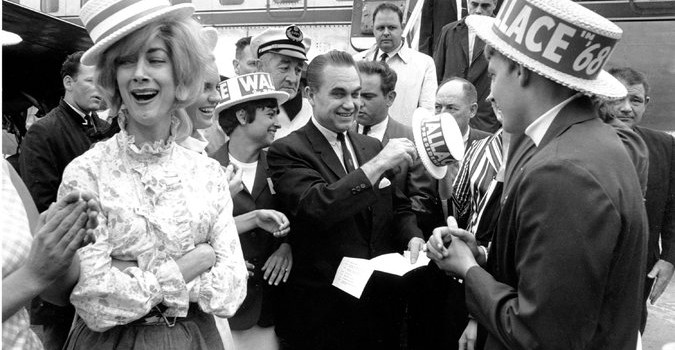
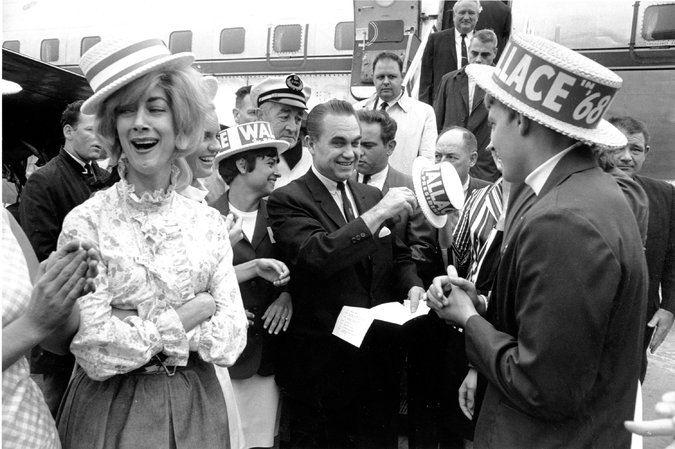
George Wallace, the former Alabama governor, ran for president as an independent in 1968 on an overtly racial appeal. Credit Associated Press

Strom Thurmond in 1948 and George Wallace in 1968 staged independent candidacies founded on overtly racial appeals. John B. Anderson, a moderate Republican congressman, ran as an independent in 1980. The high-water mark since Roosevelt came in 1992, when Mr. Perot won 19 percent of the popular vote as an independent; he ran again in 1996 and drew less than half of that.

By running within the Republican Party, Mr. Trump last year managed what they never did, while making clear that he was not really a party man. The feeling was mutual. The Republican establishment resisted even after he had won enough primaries to secure the nomination, and he repeatedly threatened to run as an independent if he felt mistreated.

As someone who spent George W. Bush’s presidency as a registered Democrat, Mr. Trump had the potential to cross lines, but once inaugurated, he chose a hard-right path of banning visitors from certain Muslim-majority countries, pulling out of a climate change accord and seeking to overturn Mr. Obama’s health care program. He seemed uninterested in working with Democrats, and they seemed uninterested in working with him.

“There could have been some ways early on in his presidency to use his unique standing of a somewhat-independent who did not have the normal party strictures, and to date he has not been able to capitalize on that,” said Thomas F. McLarty III, who was Bill Clinton’s first White House chief of staff.

Yet even as he ignored Democrats, Mr. Trump was not governing as a traditional Republican, particularly on issues like free trade or national security alliances. Republican leaders distanced themselves when he made racially inflammatory comments after a white nationalist rally erupted into violence in Charlottesville, Va.

Other presidents have tacked against their own parties at times. Franklin D. Roosevelt sought to oust conservative Democrats who bucked him during party primaries in 1938. Ronald Reagan worked with Democrats, who controlled the House, to pass his agenda. Mr. Clinton introduced the term “triangulation” to the political vocabulary as he negotiated budget and welfare deals with Speaker Newt Gingrich.

But none seemed as distant from his own party as Mr. Trump. Breitbart News, the archconservative website run by his former adviser Stephen K. Bannon, delights in attacking establishment Republicans like Mr. Ryan. At a conference in Washington this past week featuring prominent political veterans from both parties, Republicans often expressed harsher assessments of Mr. Trump than Democrats did.

“There’s still a big question about whether he has a political strategy that matches his willingness to bash his own party,” said William J. Antholis, director of the University of Virginia’s Miller Center, which sponsored the conference. “There’s clearly a genius about Donald Trump. The question is whether it translates into political wins. If he continues to do this, would he get the Republican nomination? Would he run as an independent?”

The more immediate question is whether he will continue to seek agreements with Democrats. “President Trump campaigned as a conservative with an independent streak,” said Greg Mueller, a conservative consultant. “This disposition helped him build a winning coalition, but I think it’s too early to make a determination that he will now adhere to a strongly independent path and steer from his more conservative base.”

The Democrats’ liberal base finds Mr. Trump so anathema that party leaders will be pressured not to make concessions in the interest of finding consensus.

“The profound problem for him is this would have been a smart way to do things eight months ago, but post-Charlottesville, it’s really hard,” said Neera Tanden, president of the Center for American Progress, a left-leaning research organization. “He can do deals where Democrats win, but it’s really hard to get progressives to stretch for Trump.”

As for Republicans, Mr. Domenech said they should not think of Mr. Trump as their party leader. “They need to approach him the way they would have approached a Ross Perot presidency,” he said. “They’re dealing with a guy who technically has an R next to his name, but only technically. We have to convince him that our way is better, not just assume he’ll think so.”

Source: US Government Class

Clinton assails Trump, Bernie Sanders in new book

CBS News – Hillary Clinton accepts some blame for her shocking loss in the 2016 presidential election, but she also takes shots at now-President Trump, according to a copy of her new book obtained by CNN’s Jeff Zeleny.

In, “What Happened,” which comes out Sept. 12, Clinton gives a previously undisclosed level of detailed about her thought process during the campaign, and reflection since then. Zeleny disclosed the following passage:

“Still, in terms of fighting the previous war, I think it’s fair to say that I didn’t realize how quickly the ground was shifting under all our feet. I was running a traditional presidential campaign with carefully thought-out policies and painstakingly built coalitions, while Trump was running a reality TV show that expertly and relentlessly stoked Americans’ anger and resentment.”

But Clinton also assails rival Democrat Sen. Bernie Sanders, of Vermont, in her new book, casting him as unrealistic and partly blaming him for President Trump’s surprise win, according to leaked passages shared on social media.

The former secretary of state didn’t hold back about what she thinks of her her old rival Sen. Bernie Sanders. Clinton, in an excerpt of the book leaked on Twitter this week, painted the Vermont senator as lacking in original ideas and woefully impractical, to the point that he resorted to tainting her image and caused “lasting damage” in the 2016 election cycle.

In one passage, Clinton said her top policy adviser Jake Sullivan likened Sanders’ optimistic policy proposals to a movie scene about “magic abs” commercials, and Clinton said a Facebook post about Sanders offering a pony to everyone in America summed up her situation.

“Jake Sullivan, my top policy adviser, told me it reminded him of a scene from the 1998 movie There’s Something About Mary. A deranged hitchhiker says he’s come up with a brilliant plan. Instead of the famous “eight-minute abs” exercise routine, he’s going to market “seven-minute abs.” It’s the same, just quicker. Then the driver, played by Ben Stiller, says, “Well, why not six-minute abs?” That’s what it was like in policy debates with Bernie. We would propose a bold infrastructure investment plan or an ambitious new apprenticeship program for young people, and then Bernie would announce basically the same thing, but bigger. On issue after issue, it was like he kept proposing four-minute abs, or even no-minute abs! Magic abs!”

Because the two agreed on so much, Sanders “had to resort to innuendo and impugning my character,” Clinton claimed, according to the leaked passage. Those attacks inflicted “lasting damage, making it harder to unify progressives in the general election and paving the way for Trump’s “Crooked Hillary” campaign. But Clinton said she didn’t know if that bothered Sanders.

“I don’t know if that bothered Bernie or not. He certainly shared my horror at the thought of Donald Trump becoming president, and I appreciated that he campaigned for me in the general election. But he isn’t a Democrat — that’s not a smear, that’s what he says. He didn’t get into the race to make sure a Democrat won the White House, he got in to disrupt the Democratic Party.”

That leaked page ends with a scathing, “I am proud to be a Democrat, and I wish Bernie were, too.”

Sanders ultimately endorsed Clinton in the general election cycle, but only after a brutal primary season that left the Democratic Party working to unify itself instead of focusing on the Republican opponent.

Clinton has hinted that her new book will offer an unprecedented level of access to her thoughts.

“In the past, for reasons I try to explain, I’ve often felt I had to be careful in public, like I was up on a wire without a net. Now I’m letting my guard down,” the book’s introduction reads.

Source: US Government Class

Enrollment slumping at most N.M. universities

Santa Fe New Mexican – New Mexico State University Chancellor Garrey Carruthers has charisma. With his quick wit and friendly demeanor, the high-spirited 78-year-old can turn a tense situation into a fun and relaxed setting.

The former Republican governor of New Mexico also has friends in high places with political clout and deep pockets, which has served him well as the head of the state’s second-largest university.

But what Carruthers doesn’t have is enough students navigating the classrooms on campus in Las Cruces, at least not in the eyes of the university’s board of regents.

When the regents gave the popular chancellor the boot last week, announcing they would move forward with a search for a new leader amid calls from lawmakers and others to keep Carruthers on board, some of them cited declining enrollment and Carruthers’ inability to turn the numbers around as a driving factor behind their decision.

“That’s terrible,” Las Cruces Mayor Ken Miyagishima, one of many who lobbied to keep the former Republican governor of New Mexico at the helm of NMSU, said after the regents voted to look for a replacement. “To blame Chancellor Carruthers for declining enrollment when other universities experience the same is unfair.”

Declining enrollment is, in fact, endemic at New Mexico’s other higher education institutions, with a few exceptions.

From 2012-16, five of the seven research and comprehensive universities and colleges in New Mexico have experienced shrinking enrollment, according to an analysis by The New Mexican. The decline over the five-year period ranges from 3.61 percent at Western New Mexico University in Silver City to nearly 40 percent at Northern New Mexico College in Española.

Educators and others point to several factors behind the drop in enrollment, from falling revenues in New Mexico’s lottery scholarship program to a decline in the number of high school graduates. But most say the state of the economy is the root cause.

New Mexico Higher Education Department Secretary Barbara Damron was unavailable for comment Friday, but department spokeswoman Lida Alikhani said fluctuations in enrollment are part of a national trend and closely tied to the economy.

“We’re continuing to see encouraging economic news in New Mexico, and that is undoubtedly having an impact,” Alikhani said in an email. “The better question is how will our universities respond? Clearly, adjustments will have to be made, and those aren’t always easy. It’s also our highest priority to keep tuition affordable at our universities — meaning that universities should not try to ‘cover the cost’ of declining enrollment by raising tuition on students.”

Earlier this year, the regents in Las Cruces raised tuition by about 6 percent, though officials say the increase was used for “student outcomes,” such as scholarships and student advising.

While enrollment fell by nearly 16 percent at NMSU between 2012 and 2016, enrollment was down 13.8 percent since Carruthers became chancellor. In addition, the university saw an 11.3 percent increase in first-time freshmen this year, the largest increase in the past 17 years.

“I certainly feel we are turning the corner when it comes to enrollment,” Carruthers said in a statement last month when the university’s marketing and communications office touted the jump in first-time freshmen. “From what we know so far, our increase in first-time freshmen is incredibly strong, if not the highest in the state.”

NMSU Board of Regents Chairwoman Debra Hicks, who got wind Friday that the university was once again promoting the first-time freshmen numbers, called The New Mexican to emphasize that the news release “didn’t really talk about enrollment” overall.

“First-time freshmen is not the same thing as enrollment,” she said, adding that the university’s target is 18,000 students. In the fall of 2016, enrollment at NMSU was 14,852 students.

“We’re losing state funds, and we’re losing tuition from enrollment,” Hicks said.

Year-over-year declines in enrollment weighed heavily on the regents’ decision to not extend Carruthers’ contract, despite political pressure from lawmakers, donors and others across the state.

“We’re on the downward decline when you compare us to our peers in the state and notably [at the University of Texas at El Paso] and others,” Hicks said last week after the board voted 4-0 to begin the search for a new chancellor. “Within the state of New Mexico, other universities have increased their enrollment, and we have not.”

According to figures provided by the state’s Higher Education Department and some of the universities, enrollment increased at only two higher education institutions in the state between 2012 and 2016: Eastern New Mexico University in Portales and the New Mexico Institute of Mining and Technology in Socorro — 2.67 percent and 1.43 percent, respectively.

Enrollment numbers for the fall of 2017 are not yet available.

At the University of Texas at El Paso, which New Mexico State University considers a peer institution, enrollment continues to climb. Enrollment at the school, which has been on the rise for 18 consecutive years, increased more than 5 percent from 2012 to 2016.

At Western New Mexico University, President Joseph Shepard said his school’s enrollment decreased slightly but isn’t seeing the same declines as the other universities.

“There is a correlation between the economy and enrollment,” he said. “The greater the unemployment, the greater the enrollment. In our area, unemployment has fallen.”

Shepard also cited fewer high school graduates and lottery scholarship dollars as other factors for the drop in enrollment.

“Less available money means less students,” he said, adding that lottery dollars now fund the university at slightly more than 60 percent compared to more than 90 percent just a few years ago.

Dr. Ivan Lopez, provost and vice president for academic affairs at Northern New Mexico College, said the dip in enrollment at the Española college is partially a result of a “substantial increase” in tuition and fees in 2011.

“Northern was forced to implement tuition/fees increases to address a continuous decrease in our state appropriation since 2008, and the rising operational costs since the college changed its mission from a community college to a 4-year institution,” he wrote in an email.

A recent report by the Center on Budget and Policy Priorities found that New Mexico is among the states that have seen the deepest cuts in higher education spending since the recession. While schools raised tuition by an average of about 2 percent, or $131 per student, the state cut higher education spending by about $50 per student in the last fiscal year, the report found.

“I don’t envy the legislators,” said Jeff Elwell, who became president of Eastern New Mexico University about two months ago.

“They have a lot of tough decisions to make. You’ve got K through 12. You’ve got Medicaid. You’ve got roads and prisons. We’re getting a smaller and smaller percentage; although, quite honestly, New Mexico gives a larger percentage of their budget than most states,” he said. “I just went to new presidents academy in San Diego, and there were 25 of us from 16 states. They range from 6 to almost 40 percent, and we’re close to 50 percent of our funding comes from the state. While it’s gone down, there are a lot of places [where] a lot of those institutions are in single digits.”

Patrice Caldwell, Eastern’s director of planning and analysis, said the state cuts haven’t affected the university.

“But I would not discount issues of funding for higher education as having at least a residual effect on people’s confidence in the universities being able to deliver courses, programs and the services that people have become accustomed to,” she said. “I think Dr. Carruthers raised this concern at New Mexico State.”

Carruthers, who became dean of the school’s business college in 2003, became chancellor in 2013 and guided NMSU through the state’s fiscal crisis. Carruthers was an occasional critic of Gov. Susana Martinez, who vetoed the entire higher education budget in the 2017 legislative session. Carruthers announced last month that he planned to retire but later said he would be willing to stay, spurring accusations that Martinez, who is term-limited and appointed all five regents at NMSU, had blacklisted Carruthers and wanted to take over his job, which currently pays about $385,000 annually.

“Nothing could be further from the truth,” Regent Kari Mitchell said last week. “I think we can very quickly and easily dismiss this notion that this is an effort to put the governor in this seat.”

While Carruthers steered the university through budget cuts, “you can’t cut your way to success,” Mitchell told the Las Cruces Sun-News.

“You have to grow your way to success,” she said.

Elwell said he feels “very badly” for Carruthers.

“He’s known nationally — I can tell you that just coming into this state,” Elwell said. “I think he’s done all the right things. I don’t know what all was involved in the decision, but I’m very sorry to see that happen because I think he’s a great guy and has been a great education leader.”

Source: US Government Class

U.S. job market cooled in August

CBS News – Job growth slowed in August as U.S. employers added 156,000 nonfarm jobs, below a consensus forecast of 180,000. Yet even that decreased pace suggests that businesses remain confident in an economy now in its ninth year of recovery from the Great Recession.

The Labor Department says the unemployment rate ticked up to 4.4 percent, from 4.3 percent in July. Job gains in June and July were revised downward by 41,000 jobs. The economy has averaged monthly job gains of 176,000 so far this year.

Average hourly pay has just increased 2.5 percent over the 12 months ending in August. Pay raises typically average 3.5 percent to 4 percent when the unemployment rate is this low, but the rate of wage increases has remained stubbornly low.

Modest wage growth suggests employers do not yet feel pressure to significantly boost pay to attract and retain workers, some economists think.

Overall, the job market has remained healthy even though the economy grew at a subpar annual pace of 2.1 percent during the first six months of 2017.

The fastest-growing sector was professional and business services, which tend to be higher paying, adding 40,000 jobs in August. Manufacturing and construction payrolls grew by 36,000 and 28,000, respectively, while health and education services companies added a lower-than-average 25,000 jobs. Leisure and hospitality firms added only 4,000 jobs.

Tepid wage growth and soft inflation readings could deter the Federal Reserve from continuing to hike interest rates at its policy meeting later this month.

“When the Federal Reserve meets in September, they should take a hard look at the data, which right now shows it’s too soon to raise interest rates,” said Elise Gould, a senior economist at the Economic Policy Institute.

Source: US Government Class