apgov

N.M. film industry hopeful new governor will address rebate cap

Santa Fe New Mexican – The last time New Mexico elected a new governor, the state’s budding film industry faltered.

The next time should go smoother.

There is a sense within the industry that the changeover promised by the November election is an opportunity not only to keep things rolling in Tamalewood but also to buoy and ultimately boost the business of film and television work in New Mexico.

And the gubernatorial hopefuls seeking to succeed term-limited Gov. Susana Martinez say some potentially consequential tweaks to the state’s film and television tax incentive program — including removing or raising the payout cap some view as an impediment to future growth — could round out this increasingly prominent piece of the state economy and fully re-establish New Mexico’s status in the broader moviemaking industry.

“Georgia stole our business,” said U.S. Rep. Michelle Lujan Grisham, D-N.M. “Fairly and squarely. They invested in schools; they invested in studios; they invested in an entire infrastructure. We should be doing the same.”

The next governor will inherit a film economy that has drawn more in-state direct spending from film and television productions each year since 2014, topping out at $505 million last fiscal year.

In the current fiscal year, however, spending is trending the other way: There was only $97 million spent in the state in the first two quarters, according to the New Mexico Film Office, which would put the state on track for a nearly 60 percent decrease.

New Mexico had seen only 17 productions with at least a $1 million budget through those two quarters. There were 52 such productions the previous fiscal year.

A slowdown, if it is one, might be seen as a consequence of the chilling effect of the annual cap on the state’s tax-incentive payouts, a $50 million ceiling installed by legislators at Martinez’s urging in 2011.

It also could be ascribed simply to the whims of a fickle industry that didn’t have as many Westerns in the pipeline this year.

But the dynamic suggests the next administration will have the choice, and perhaps the imperative, to stabilize and accelerate what has been a bright spot in the state’s hot-and-cold economy — or otherwise see it sink.

U.S. Rep. Steve Pearce, the only Republican in the race and thus his party’s presumptive nominee, emphasized a “fiscally responsible and sustainable” approach to the film business, which he said must be made more “geographically diverse, more economically sustainable and more permanent.”

Overall, it is “a uniquely important asset for our state’s future,” Pearce said in a statement, in which he floated “new collaborative education and worker training and a focus on keeping post-production jobs in New Mexico.”

His general approach — the finer points of which are still being hammered out, an aide said — contrasts sharply with that of then-candidate Susana Martinez, a fellow Republican with whom Pearce has not always aligned.

Martinez, who came into office talking tough about reining in the incentive program, saw production activity fall off as her term began, with previously skyrocketing spending numbers tumbling to a low of $162 million in 2014.

But Martinez changed her tune, signing into law the 2013 “Breaking Bad bill” that enhanced incentives for television productions and celebrating industry spending at annual news conferences.

Still, amid the ballooning growth, the cap has remained in place, and industry advocates in the state have long railed against it as an arbitrary roadblock to further expansion that creates a bottleneck of past-due rebates owed to production companies.

End of the cap?

Jeff Apodaca, a former media executive and Democratic candidate, will address those rebates with haste, he said through a spokesman.

“New productions have slowed because of Gov. Martinez holding back payments,” said Peter DeBenedittis, communication director for Apodaca. “Paying this off immediately will be a priority.”

Lujan Grisham, in a phone interview, said the same thing.

“In the transition, we can sweep money and make those payments, ahead of 2019,” she said. “No one’s been talking about it. I want to hear from legislators and look at what the budget is, but we have to make these back payments.”

State Sen. Joe Cervantes, D-Las Cruces, the third candidate in the Democratic primary, likewise said it is essential the state “meet obligations in a timely way” and beef up its internal film-focused infrastructure.

“The film office has achieved remarkable success with very little increase in its budget or staffing,” Cervantes added. “And I’m convinced that with greater support, we would see a corresponding benefit to the state.”

Messages seeking clarity on the extent of past years’ rebates that have rolled over were not returned by a spokesman for the state Economic Development Department, within which the state film office operates. As of the end of February, the state Taxation and Revenue Department website showed 34 film production refunds totaling $27.8 million for the current fiscal year.

The cap’s continued existence, despite Martinez’s friendlier posture to the industry, remains cause for consternation for producers who want more certainty on when they’d get their rebates from the state, said Eric Witt, who leads the joint city-county Santa Fe Film Office.

“But as important is re-establishing an affirmative and aggressive support for the business,” Witt said. “We could actually return to the trajectory we were originally on.”

In Georgia, he pointed out, the film industry draws billions of dollars in direct spending — $2.7 billion in the most recently concluded fiscal year, according to state figures.

“At a certain point you want to take off the shackles and turn the thing loose and see its full potential,” said State Sen. Jeff Steinborn, D-Las Cruces, who is board president of the nonprofit Film Las Cruces.

Apodaca would eliminate the cap, “allowing film production to grow to three times the current volume,” said DeBenedittis, himself an erstwhile candidate for governor.

Lujan Grisham said she would not only remove the cap but “redesign how we do the rebates so those applicants feel like we’re open for business, not that we mistrust how they’re using these rebates — because that’s what this governor’s done.

“If the Legislature wants to have some formula for an economic crunch, I’m not going to say I would be totally opposed to that,” she added. “But it’s contrary to how these things work. If you want the industry to be here, you have to lift [the cap] in its entirety and say, ‘We’re open for business,’ and that is the strategy I want.”

Pearce, though in the same ballpark, was more circumspect, saying in his statement: “While we must raise the cap on film tax credits, that action must only be part of a plan, not the end point of a plan.”

Cervantes said he’d support raising the cap but cautioned the state might lose some predictability in its budgeting process without one. Still, “It ends up being a limitation on our willingness to grow a particular segment of the economy,” he said. “That shouldn’t make any sense to us. When we have a thriving segment of the economy, we shouldn’t be putting restrictions on it.”

Winds of change

There are outside circumstances that also could factor into the near-term future of the state’s film economy.

The new Republican tax law includes a provision that observers expect will incentivize the return of intellectual property rights that had been stashed abroad. And the United Kingdom’s scheduled March 2019 departure from the European Union could have implications here as well.

Both developments might unsettle film and media businesses based in Canada and the U.K. to the point that they look back to the United States, said Witt, who helped put together the then-nascent state film business under former Gov. Bill Richardson.

New Mexico, with the right policies in place, could stand out as a potential landing spot.

“All things being equal, New Mexico is a much more attractive place to produce” than other states with enviable film programs, Witt said. “We’re closer [to Los Angeles]; the weather’s better; and we have the infrastructure, the crew, the soundstages. You want people saying, ‘Why the hell are we going to Louisiana when we can get the same deal in New Mexico?’

“I won’t say there are expectations, but there is hope that we kind of get our act together and get back to where we were in terms of being a leader in this industry” after the election, Witt added.

“The growth curve we were on would have put us at about $2.5 [billion] to $3 billion in production today,” he said. “People are like, ‘You’re crazy.’ No, look at what Georgia did last year. They stepped into our position when we dipped down in 2011. We can return to that if we play our cards right.”

Possible initiatives

A few of the candidates said a key step on the path forward will be drawing more film activity to areas outside the Albuquerque-Santa Fe corridor.

Last year, Martinez vetoed a measure, sponsored by Steinborn, that would have extended additional tax rebates to some productions for shooting at smaller facilities. The bill passed both chambers overwhelmingly; Martinez, in her veto message, wrote she had “not seen data indicating the need for expanding the credit.”

But the idea might find traction with Pearce, of Hobbs, who in his statement suggested he’d pursue a more “geographically diverse” industry. “My number one priority as governor will be bringing economic opportunity to every New Mexican,” he said. “We must increase the film industry’s reach.”

Cervantes also said there is the potential for growth in exploring the more rural parts of the state. “New Mexico has always enjoyed the reputation of being a creative state, where artists thrive,” he said. “It’s part of our heritage.”

Lujan Grisham said film would be a day-one priority. The day after the election, to be precise.

“Day after, I want members of the film industry here and from around the country invited to a meeting,” she said, adding she’d pursue an additional incentive for areas outside the Interstate 25 corridor. She also said she’d “mandate a coordinated effort” between her film office, economic development department and tourism department to “create that business-friendly environment.”

“These are the kinds of industries New Mexico is going to be known for,” she said. “And it won’t be one we just draw in, where they come here, work here and then leave and maybe come back in a few years. This becomes the next place where people stay. I want homegrown talent, and I know we have it. We invented the creative economy. Let’s hold onto it; let’s show it to the rest of the world.”

Contact Tripp Stelnicki at 505-428-7626 or tstelnicki@sfnewmexican.com.

New Mexico’s film tax incentive cap

New Mexico offers up to 25 percent in rebates on some expenses for film productions and up to 30 percent for television series. In the simplest terms, a production that spends $10 million in the state that qualified at the 25 percent rate would receive $2.5 million back.

In 2011, the state established a limit of $50 million that it can pay out to productions every year. The state cannot exceed that ceiling but can shift expected rebates over to the next fiscal year.

Advocates within the state industry have said the cap threatens to throttle growth, as production companies might get skittish about when they would receive their rebates and look elsewhere. Others, including some legislators, have said it helps ensure stability in the budgeting process.

Source: US Government Class

Trump says US ‘cannot allow’ Syrian chemical weapons attacks

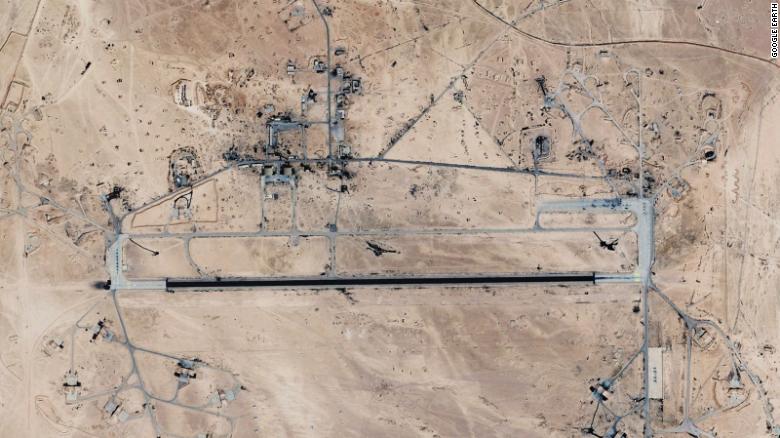
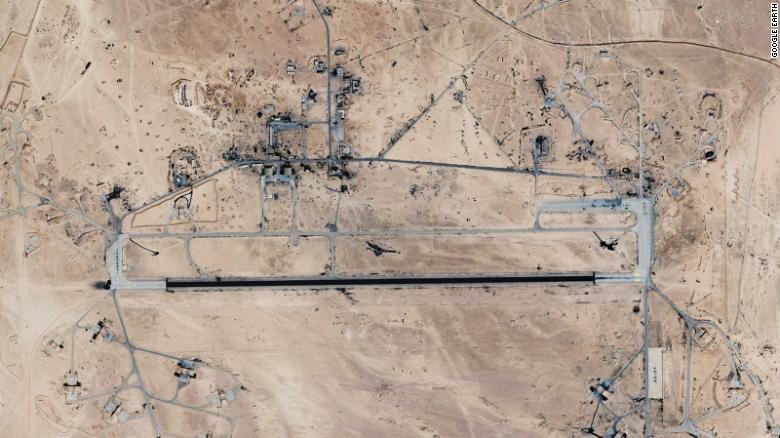
Washington (CNN) – President Donald Trump said Monday he will make a decision as early as this evening on the US response to what he called an “atrocious” chemical weapons attack on civilians in Syria and warned that he will hold the responsible parties accountable.

“We cannot allow atrocities like that. Cannot allow it,” Trump told reporters on Monday during a Cabinet meeting as he warned that “nothing’s off the table.” “If it’s Russia, if it’s Syria, if it’s Iran, if it’s all of them together, we’ll figure it out and we’ll know the answers quite soon”
Pressed on Russia’s role in the suspected chemical weapons attack, Trump said Russian President Vladimir Putin — who backs the Syrian regime — “may” bear responsibility.
“He may. And if he does, it’s gonna be very tough. Very tough,” Trump said of the US response. “Everybody’s gonna pay a price. He will and everybody will.”
The Syrian government and Russia have vehemently denied involvement in the attack and accused rebels in Douma of fabricating the chemical attack claims in order to hinder the army’s advances and provoke international military intervention.
Russian Foreign Minister Sergey Lavrov said Monday that his country had sent experts to Douma and that there was “no trace” of the use of chemical weapons there.
Trump’s comments are his first public remarks on the attack, which killed dozens of civilians, since he tweeted about it on Sunday and warned of a “big price to pay” for those responsible. His statement comes almost exactly a year after he fired 59 Tomahawk missiles at a Syrian airbase in response to a chemical weapons attack against civilians.
Trump said the US is still working to determine who is directly responsible for the attack, which was widely publicized in recent days after graphic on the ground footage of victims was shown around the world. Trump said his decision could come as early as the end of Monday or within the next 48 hours.
“I’d like to begin by condemning the heinous attack on innocent Syrians with banned chemical weapons,” Trump said. “It was an atrocious attack, it was horrible. You don’t see things like that as bad as the news is around the world, you just don’t see those images.”
“We are very concerned, when a thing like that can happen, this is about humanity. We’re talking about humanity. And it can’t be allowed to happen,” he added.
Trump expressed frustration at investigators not being able to get immediate answers about who was behind the attack and said the US is working “to get people in there.”
The attack comes about a week after Trump told military leaders to draw up plans to prepare a withdrawal of the remaining US troops from Syria. Pressed Monday on whether those plans still stand, Trump simply told reporters: “We’re gonna make a decision on all of that, in particular Syria, we’ll be making that decision very quickly, probably by the end of today.”

Source: US Government Class

Santa Fe public schools won’t take NRA funding

Santa Fe New Mexican – In the wake of a growing national outcry over gun violence at schools, the five-member Santa Fe school board unanimously voted to no longer accept grant money or equipment from the National Rifle Association for the school district’s ROTC program.

Calling the leading advocacy group for gun rights “a horrible, horrible, blood-ridden vehicle,” school board President Steven Carrillo said, “We don’t want your money.”

The other board members agreed, but only after testimony from nearly 20 people — not all of whom supported the board action — and a lengthy debate about whether such an act will make any difference.

“Not accepting this money is not going to take away that fear of going to school,” said board member Maureen Cashmon, an Air Force veteran who said the board was moving down a “slippery slope” by taking the action.

She and several people who spoke during Tuesday’s board meeting said the action is a political move that unfairly targets a national organization that includes a lot of law-abiding gun owners who also want to do something to stop school shootings.

Some parents and supporters of the ROTC program, a leadership program that teaches military skills including marksmanship, said the board has inadvertently pulled the students involved in Santa Fe High School’s successful ROTC program into a complex and heated argument over how best to deal with shootings in schools.

“Our [ROTC] team has ended up in the middle of a debate that they did not create,” said parent Cynthia Pacheco, who warned the board that people who support the NRA may now decide to no longer support the ROTC program.

But others, including students, educators and retired teachers, spoke just as passionately about the need to send a message to the NRA, which generally opposes gun control legislation.

Some of the students spoke about the daily fear they feel given the recent wave of school shootings, including one in Parkland, Fla., that took the lives of 17 people in February, and a December incident in Aztec, where two students as well as the shooter died.

Adding to local tensions, Santa Fe High School experienced two incidents involving shooting threats by students at the campus late last year.

“We are the ones who are in the schools, we are the ones who are getting the backhand of it all,” said Capital High School senior Gabriella Rodriguez, who serves as a nonvoting student member of the board of education. “We’re scared to go to school. We have teachers who are scared to go to school.”

Military veterans involved with ROTC, which stands for Reserve Officers’ Training Corps, stopped short of opposing the proposal, but painted a picture of a student program that has grown in popularity and success in part because of backing from the NRA, which has included providing air guns, ammunition, targets and other equipment.

“Support from the NRA has allowed our program to get quality equipment that has turned these kids into national champions in a very short time,” said Lt. Commander Craig Stapleton, who oversees the program.

He said the program also receives grant money from the Los Alamos National Laboratory Foundation. “There may be people who are anti-nuclear weapons,” he told the board. “Is that an issue?”

For the past several years, the NRA has provided Santa Fe Public Schools with about $4,000 worth of equipment for the ROTC program at Santa Fe High School. The district invests $117,000 a year in the program, but that does not include money the program receives from other sources.

The ROTC students have been racking up a number of local, state and national awards in recent years. In March, four students in the program earned top honors at the 2018 All-Service National Junior ROTC Championship, a marksmanship competition for high schoolers, beating out 25 other four-person teams from across the country. A second Santa Fe High team placed eighth in the shooting match, held at Camp Perry in Ohio.

A recent Associated Press report said the NRA has given more than $7 million to some 500 schools across the nation, often for ROTC programs, between 2010 and 2016. School districts elsewhere have also decided against accepting NRA support.

In a statement released by the NRA before Tuesday’s vote, spokeswoman Catherine Mortensen said, “The money in question is raised by individuals within the Santa Fe community. The school board would punish a program such as JROTC, which teaches leadership and develops character among local youth, just to make a political point. The school board should be made to absorb the costs of this program out of their own budget.”

And that may happen. Though Carrillo and board member Kate Noble each said they had already talked with anonymous donors who agreed to cover the $4,000 grant money for at least two years, Cashmon asked for an amendment to the action that requires the district to use money from its operational fund to cover the $4,000 if those community members do not come forth to do so.

Source: US Government Class

Americans tell Interior to take a hike over proposed National Park fee increase

Santa Fe New Mexican – Interior Department officials are backing away from a plan to dramatically increase entrance fees at the most popular national parks after receiving more than 100,000 public comments from Americans nearly unanimously opposed to the idea.

Last October, Interior Secretary Ryan Zinke proposed to increase peak-season entrance fees at 17 parks from $25 to $70 — the largest hike since World War II. Joshua Tree National Park in California, where the peak season starts in January, would have been the first to charge the higher rate, followed by a dozen other parks where visitation peaks in May and June. The cost of riding a motorcycle into the parks would have risen to $50 and walking or biking in would have cost $30.

But as temperatures climb and parks prepare for another season of potentially record-breaking visitation, Interior and National Park Service officials are rethinking the plan based on public comments that inundated the NPS website over an abbreviated 30-day period.

“So the NPS would more than double the current entry fee for peak season,” read the first of 50,000 comments Interior provided to The Washington Post. “I know if I were considering a trip to one of these parks and suddenly found that the trip would incur an exorbitant entrance fee, I would not … repeat not take my family on this trip.”

“$70 is insane!” another comment declared. “What the hell? You need to go to Congress, get them to fund NPS, and then get our president to actually sign it.”

For every comment in support (“I WHOLEHEARTEDLY APPROVE of this. It’s about time rates went up,” one submission said), there was a flurry of opposition. “This price hike is just too much,” said comment No. 11,424. “Having to pay $70 just to get in would definitely make me consider other options for our family vacation.”

An Interior official familiar with the changes now being discussed said some type of increase remains almost certain, but the dramatic hike is being reconsidered for fear that it would cause visitation to plunge, reducing sorely needed revenue at top destinations such as Yosemite in California, the Grand Canyon in Arizona, Zion and Bryce in Utah, and Yellowstone in Montana, Idaho and Wyoming.

“We’re working to respond to those … thoughtful and well-put comments,” the official said. “Our ultimate goal when it comes to entrance fees is to make sure the parks get 80 percent of that revenue … but we also don’t want to put a burden on our visitors. We believe there is room to increase the fees and the annual passes.”

The parks with no entrance fees will stay that way, he said.

The official would not disclose the revised rate structures being considered but said the goal is a more modest adjustment to fees that haven’t increased in a decade. A 10 percent fee increase for all parks with entrance charges is on the table, as is a $20 increase in the $80 seasonal and senior passes. The agency is also debating whether to increase tour buses’ flat-rate charge, he said, or to implement a per-passenger bus fee to increase revenue.

Zinke and the Park Service’s interim director continue to meet on the issue, according to the official, who only was authorized by Interior to speak anonymously.

In his October announcement, Zinke said the fee increases he was proposing would raise $70 million to help address a nearly $12 billion maintenance backlog with deteriorating park buildings, restrooms and roads. “Targeted fee increases at some of our most-visited parks will help ensure that they are protected and preserved in perpetuity and that visitors enjoy a world-class experience,” the secretary said in a statement.

But Zinke backpedaled in congressional hearings last month, signaling a change in his position in response to questions from concerned committee members. He testified at a Senate hearing that Interior was now undecided about the rates and looking at various alternatives. At a House hearing that same week, he said the aim was to not hurt families.

Two bills in Congress have been introduced to address the maintenance backlog using royalties from federal onshore and offshore energy production.

Zinke’s critics noticed a change in his tone. It “gives us hope that the administration has heard the outcry from the public and will abandon or significantly alter their proposal,” said Emily Douce, director of budget and appropriations for the National Parks Conservation Association. The association’s analysis of submissions during the public comment period showed 98 percent were opposed to the fee increase.

Rich Dolesh, a vice president for the National Recreation and Parks Association, said Monday that a survey conducted by a coalition of 55 national and local groups showed that people who were less likely to visit a park under the proposed fee hike were individuals who earned $30,000 or less annually. According to the survey by the Outdoors Alliance for Kids, nearly 70 percent of respondents opposed or strongly opposed a rate increase, and 83 percent said it would make a park visit more difficult.

“If you don’t keep the next generation of Americans connected and valuing our national parks, it would irrevocably break a bond that’s been there since the parks were created,” he said. “And if it’s a fee increase that’s a barrier, that’s not right. We should be looking at better ways to get our families to access our parks.”

Dolesh said increasing the price of annual and senior passes is a “tough” decision since retired Americans often have fixed incomes. He was also skeptical of any idea to increase tour bus fees because the buses are often filled with schoolchildren.

That was the point made in one public-comment submission: “As a current employee of the NPS and an avid visitor of NPS sites, I believe increasing the rates in the 17 parks will make the parks unaffordable for families and low-income individuals.”

But Dolesh echoed several comments about charging more to visitors from Europe, Asia and other foreign countries who tour national parks. “It makes sense,” he said. “Those are people who can clearly afford to pay, and other countries do this.”

“Some may say an increase for those tourists coming from other countries may discourage them from visiting our parks, but I disagree — they are more than willing to pay these fees,” according to comment No. 5,109. “This is evident by the sheer numbers of European and Asian tourists that flock to the parks via tour buses and package deals from excursion companies.”

Source: US Government Class
How Parkland students feel about their new mandatory clear backp

(CNN) – Survivors of a school shooting in Parkland, Florida, returned from spring break Monday to new security measures that some students said made them feel like they were in prison.

Marjory Stoneman Douglas students encountered security barriers and bag check lines as they entered campus Monday morning.
Inside the school, administrators handed out the students’ newest mandatory accessories: a see-through backpack much like the ones required at some stadiums and arenas, and an identification badge they must wear at all times.

The bags were yet another stark reminder of how much had changed since a former student stormed the hallways on February 14, gunning down 17 people, junior Kai Koerber said.
First, students lost their classmates and teachers. Now, with the bags, they’re sacrificing their privacy for what he and others consider an ineffective security measure.
“It’s difficult, we all now have to learn how to deal with not only the loss of our friends, but now our right to privacy. My school was a place where everyone felt comfortable, it was a home away from home, and now that home has been destroyed,” he said.

‘This backpack is probably worth more than my life’

The shooting galvanized a student-led movement calling for stricter gun laws, and some students used the clear bags to make a political statement.
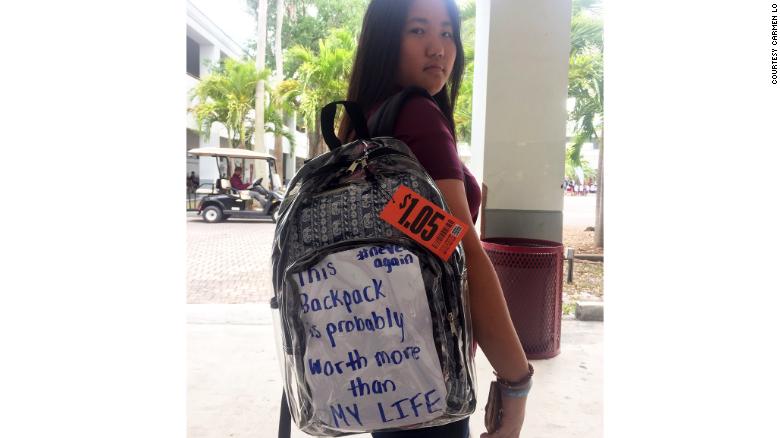
Koerber and others attached an orange price tag to their bags. The $1.05 tag is intended to protest politicians, including Florida Sen. Marco Rubio, who accept money from the National Rifle Association, by putting a price on each student.
“We are doing this in order to demonstrate the fact that we stand together on all issues, and that we, as a student body, refuse to be reduced to nothing more than dollars and cents,” Koerber said.
Senior Delaney Tarr tagged Rubio in a tweet of a picture of her bag with feminine products and the orange price tag attached to it.
“Starting off the last quarter of senior year right, with a good ol’ violation of privacy!” she said in another tweet.
In addition to displaying the orange tag, senior Carmen Lo stuffed a sign into her backpack that read “this backpack is probably worth more than my life.”
She also wonders how students will carry sports equipment, instruments and laptops.

“Many students are actually unhappy with the clear backpacks, as they believe that it infringes on their privacy, so they wrote messages on pieces of paper and put it into the clear backpacks,” she said.
“We come to school to learn, so I don’t think that we should need to subject ourselves to these measures. We shouldn’t need to worry about our safety and our security while we are at school.”

Solution or pacification?

Koerber thinks metal detectors would be more effective than clear backpacks.
“Just implement a system that works. Similar to what they do at court houses and the airport!” he said. “It’s terrible that girls will have no privacy concealing their feminine products, and these bags won’t last a week with real textbooks in them. Metal detectors are a better solution.”
The school district said it’s considering whether to install metal detectors at the school’s entrances. A letter from Principal Ty Thompson sent to families on Friday said that step has not been taken yet.
Clear backpacks may deter some from bringing weapons into school, but without metal detectors people can still conceal them in folders or in between papers, junior Isabella Pfeiffer said.
And backpacks won’t prevent firearms from getting in the hands of dangerous people in the first place, she said. It would not have prevented the February 14 rampage, because the gunman was not a student.
“This isn’t a solution to making sure that a tragedy like the one that happened at Douglas doesn’t happen again,” she said. “Many of us think that this is a way that legislators can pacify us instead of enacting actual change.”
Junior Connor Dietrich used tissue paper to obscure the contents of his bag. He, too, thinks the bags are not the answer to preventing guns from getting into the hands of the wrong people, which is what he and other students are fighting for.

“You know it’s only difficult because if we were being listened to and common sense gun legislation was brought into play we wouldn’t need all of this to be safe.”
Junior Jack Macleod said he is not opposed to the clear backpacks if they are used with other safety measures, such as metal detectors or wands.
But safety may come at the cost of a productive school environment, he said.
“I definitely feel safer, but in no way is school going to be a place of cognitive education and creativity when it feels like a jail cell,” he said.

Source: US Government Class
EPA’s auto emissions decision sparks a fierce battle

CBS News –

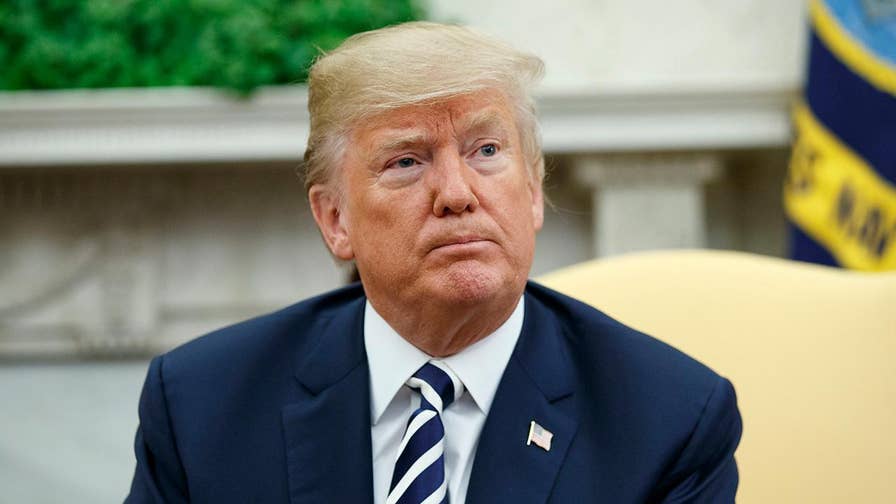
The fight over the Environmental Protection Agency’s decision to ease emissions standards for cars and trucks began as soon as the announcement came. The Trump administration’s EPA, led by Scott Pruitt, said the regulatory timeline put in place by President Barack Obama was inappropriate and set standards “too high.”

Without specifying details, which the EPA said would be forthcoming, the agency said its review of rules would affect vehicles for model years 2022-2025. The current regulations call for the entire fleet of new vehicles to get 36 miles per gallon in real-world driving by 2025 — about 10 mpg over the existing standard.

Automakers applauded Monday’s decision, arguing that the current requirements would have cost the industry billions of dollars and raised vehicle prices due to the cost of developing the necessary technology.

“This was the right decision, and we support the Administration for pursuing a data-driven effort and a single national program as it works to finalize future standards,” said Gloria Bergquist, vice president, communications and public affairs for the Alliance of Automobile Manufacturers, in a statement. “We appreciate that the Administration is working to find a way to both increase fuel economy standards and keep new vehicles affordable to more Americans.”

Environmentalists, however, warned the proposed rollbacks will make U.S. cars more expensive to fill up.

“No one in America is eager to buy a car that gets worse gas mileage and spews more pollution from its tailpipe,” said Fred Krupp, president of the Environmental Defense Fund. “Designing and building cleaner, more cost-efficient cars is what helped automakers bounce back from the depths of the recession and will be key to America’s global competitiveness in the years ahead.”

In addition, any federal rule change is likely to set up a lengthy legal showdown with California, which has the power to set its own pollution and gas mileage standards and doesn’t want them watered down. About a dozen other states follow California’s rules, and together they account for more than one-third of the vehicles sold in the U.S. Currently the federal and California standards are the same.

That has some conservative groups pressing Pruitt to get rid of the waiver that allows California to set its own rules. The EPA secretary said in a statement Monday that the agency will work with all states, including California, to finalize new standards.

“Cooperative federalism doesn’t mean that one state can dictate standards for the rest of the country,” he said. “EPA will set a national standard for greenhouse gas emissions that allows auto manufacturers to make cars that people both want and can afford — while still expanding environmental and safety benefits of newer cars.”

California Attorney General Xavier Becerra said his team is reviewing the EPA’s determination.

“We’re ready to file suit if needed to protect these critical standards and to fight the Administration’s war on our environment,” Becerra said in a statement. “California didn’t become the sixth-largest economy in the world by spectating.”

Also decrying the EPA’s decision was a joint statement by the governors of California, Oregon, and Washington, as well as the mayors of Los Angeles, Oakland, San Francisco, Portland and Seattle.

“This move sets us back from years of advancements by the automotive industry put in motion by states that took the lead in setting emission standards,” the statement said. “These standards have cleared the haze and smog from our cities and reversed decades of chronic air pollution problems, while putting more money in consumers’ pockets.”

Sen. Edward J. Markey, D-Mass., said the existing standards are “technically feasible and economically achievable,” and he added that he would use every legislative tool to block the moves.

“Slashing these standards would amount to turning the keys to our energy policy over to Big Oil and the auto industry,” said Markey, who’s a member of the Environment and Public Works Committee and chair of the Senate Climate Task Force.

According to Markey, the standards are projected to save nearly 2.5 million barrels of oil a day by 2030, around as much oil as the U.S. imports from OPEC countries every day.

It could take a couple years for the EPA to propose new rules, gather public comment and finalize any changes. In the meantime, automakers have to proceed with plans for new cars and trucks under the current gas mileage requirements because it takes years to develop vehicles.

The agency said in its decision that the regulation set under the Obama administration “presents challenges for auto manufacturers due to feasibility and practicability, raises potential concerns related to automobile safety, and results in significant additional costs on consumers, especially low-income consumers.”

The EPA said it will work to come up the new standards in partnership with the National Highway Traffic Safety Administration. Getting there, however, promises to be anything but a joyride.

Source: US Government Class

Opposing Views – Tariffs on China

Read both articles and share your thoughts. What parts of the articles do you agree or disagree with? What were the strongest points/arguments made in both articles? Comments on this article are worth 6 pts.

Bumbling Into a Trade War

Trump’s tariffs on China will benefit America and are long overdue

New York Times FoxNews

“Trade wars are good, and easy to win.” So declared Donald Trump a few weeks ago, after announcing tariffs on steel and aluminum. Actually, trade wars are rarely good, and not at all easy to win — especially if you have no idea what you’re doing. And boy, do these people not know what they’re doing.

It’s odd, in a way. After all, trade is clearly an issue about which Trump is truly passionate. He tried to kill Obamacare, but to all appearances his main concern was tarnishing his predecessor’s legacy. He wanted a tax cut, but more to score a “win” than because he cared about what was in it. But reducing the trade deficit has been a long-term Trump obsession, so you might expect him to learn something about how world trade works, or at least surround himself with people who do understand the subject.

But he hasn’t. And what he doesn’t know can and will hurt you.

In the case of steel, here’s what happened: First came the splashy announcement of big tariffs, ostensibly in the name of national security — infuriating U.S. allies, which are the main source of our steel imports. Then came what looks like a climb-down: The administration has exempted Canada, Mexico, the European Union and others from those tariffs.

Was this climb-down a reaction to threats of retaliation, or did the administration not at first realize that the tariffs would mainly hit our allies? Either way, Trump may have gotten the worst of both worlds: angering countries that should be our friends and establishing a reputation as an untrustworthy ally and trading partner, without even doing much for the industry he was supposedly trying to help.

Now comes Trumptrade II, the China Syndrome. On Thursday the administration announced that it would levy tariffs on a number of Chinese goods, with the specifics to be detailed later. How will this one work out?

Let’s be clear: When it comes to the global economic order, China is in fact a bad citizen. In particular, it plays fast and loose on intellectual property, in effect ripping off technologies and ideas developed elsewhere. It also subsidizes some industries, including steel, contributing to world excess capacity.

But while his coterie mentions these issues, Trump seems fixated on the U.S. trade deficit with China, which he keeps saying is $500 billion. (It’s actually $375 billion, but who’s counting?)

What’s wrong with this fixation?

First of all, much of that big deficit is a statistical illusion. China is, as some put it, the Great Assembler: Many Chinese exports are actually put together from parts produced elsewhere, especially South Korea and Japan. The classic example is the iPhone, which is “made in China” but in which Chinese labor and capital account for only a few percent of the final price.

That’s an extreme example, but part of a broader pattern: Much of the apparent U.S. trade deficit with China — probably almost half — is really a deficit with the countries that sell components to Chinese industry (and with which China runs deficits). This in turn has two implications: America has much less trade leverage over China than Trump imagines, and a trade war with “China” will anger a wider group of countries, some of them close allies.

More important, China’s overall trade surplus is not currently a major problem either for the United States or the world as a whole.

I use the word “currently” advisedly. There was a time, not that long ago, when the U.S. had high unemployment and China, by keeping its currency undervalued and running big trade surpluses, made that unemployment problem worse. And at the time I was calling for the U.S. to play hardball on the issue.

But that was then. Chinese trade surpluses have come way down; meanwhile, the U.S. no longer has high unemployment. Trump may think that our trade deficit with China means that it’s winning and we’re losing, but it just ain’t so. Chinese trade — as opposed to other forms of Chinese malpractice — is the wrong issue to get worked up over in the world of 2018.

And here’s the thing: By bumbling into a trade war, Trump undermines our ability to do anything about the real issues. If you want to pressure China into respecting intellectual property, you need to assemble a coalition of nations hurt by Chinese ripoffs — that is, other advanced countries, like Japan, South Korea and European nations. Yet Trump is systematically alienating those countries, with things like his on-again-off-again steel tariff and his threat to put tariffs on goods that, while assembled in China, are mainly produced elsewhere.

All in all, Trump’s trade policy is quickly turning into an object lesson in the wages of ignorance. By refusing to do its homework, the Trump team is managing to lose friends while failing to influence people.

The truth is that trade wars are bad, and almost everyone ends up losing economically. If anyone “wins,” it will be nations that gain geopolitical influence because America is squandering its own reputation. And that means that to the extent that anyone emerges as a victor from the Trump trade war, it will be … China.

President Trump signed an executive memorandum Thursday slapping $50 billion in annual tariffs and other penalties on a broad range of imported Chinese products, fulling his campaign promise to challenge a rising and increasingly rogue China. The move is justified and long overdue.

The Office of the U.S. Trade Representative will publish a list of targeted products in 15 days. That will be followed by a 30-day period for public comment. Tariffs will not be imposed for 60 days, to allow time for comment.

Nervous traders on Wall Street initially sent stock prices tumbling in reaction to reports that the president would impose the tariffs. But in the long run, the president’s action will be a plus for the U.S. economy and preserve American jobs.

By acting decisively, the president has once again proven that he will take on the toughest of foreign policy challenges, knowing there could be major political repercussions. And while many pundits are calling the president’s action a mistake, the start of a potential trade war or even foolish, I have a better definition: it’s called leadership.

President Trump framed Thursday’s actions as a response to blatantly unfair and improper Chinese rules that force U.S. firms seeking to access the Chinese market to form joint ventures with Chinese companies.

The rules enable the Chinese firms to routinely steal the intellectual property of the U.S. companies. This gives the Chinese the ability to use American-developed advanced technology to strengthen their own industries to better compete with American firms in China and around the world.

President Trump is saying, in effect, that he will not allow China to steal our trade secrets and then use those secrets to compete against us. He is pushing back against a Chinese government that is slowly but surely leveraging its newfound economic muscle – an economy worth over $11 trillion that is now the second biggest on the planet – to gain economic, political and military power throughout Asia and across the globe.

Consider for a moment some of the antagonistic actions Beijing has taken in the economic realm and beyond over the past few years. While the list below is certainly not comprehensive, it is long past time for Washington to react:

Intellectual property: As noted above, many U.S. firms can only gain access to the Chinese market if they agree to what amounts to surrendering their intellectual property when they partner with a local firm. Considering such property is the innovative blood of a first-class economy like America – and the fact that intellectual property theft could cost the U.S. as much as $600 billion annually – this is something that must be addressed.

In fact, some of the damage might be irreversible, with China now on its way to becoming the global leader in international patent filings – passing the U.S. in just three years – according to the United Nations .

Trade deficit: The U.S.-China trade deficit in 2017 rose to an astounding $375 billion. For an idea of the scale of such an imbalance in trade, it equals the total gross domestic product of Austria and nearly equals the GDP in the state of Maryland.

Just recently, the Trump administration has declared a goal of cutting our trade deficit with China by $100 billion annually – something that Chinese propaganda outlets did not take too keenly to.

Industry subsidies: We all know that a key part of the Trump administration’s plan to “Make America Great Again” is to encourage Americans to purchase U.S.-made products. China wants its citizens to buy Chinese products, but to achieve this goal the government is handing out massive subsidizes to its domestic industries so they can dominate the home market and the global economy of the future. This unfair practice puts U.S. companies trying to sell in China at a tremendous disadvantage.

China’s domestic industry subsidy program is called “Made in China 2025.” Beijing has set aside hundreds of billions of dollars for a plan to dominate and subsidize growing industries like robotics, 5G, bio-pharmaceuticals, artificial intelligence, electric cars and more in the next decade. China wants to make sure that it holds around 80 percent of its domestic market in just eight years – something not allowed according to World Trade Organization regulations – and wants to be a major player in trade around the world.

The New York Times reported this month that the European Union Chamber of Commerce in China concluded that the Chinese want to achieve their goal by providing “large, low-interest loans from state-owned investment funds and development banks; assistance in buying foreign competitors; and extensive research subsidies, all with the goal of making China largely self-sufficient in the targeted industries.”

Weapons designs: Beijing has embarked on a campaign to steal many of the most classified and lethal weapons systems the U.S. military has ever produced. The list of compromised military hardware is shocking. It includes systems such as the Patriot missile, the THAAD Missile Defense System, the F/A-18 Fighter, the V-22 Osprey, the new Littoral Combat Ship and many more.

Worst of all, many reports suggest China has successfully gained access to various design aspects of the $1 trillion F-35 program, the most important and technologically advanced U.S. military program in history.

While it is difficult to know how much of these actions are government sponsored, the reasons for such moves are obvious. With Beijing attempting to sell advanced military hardware around the world as well as build armed forces that could defeat the U.S. in battle, the motivations for such theft is clear.

As one senior Pentagon official put it to me recently: “China has stolen some of our most advanced military hardware designs. They need to pay a price for that.”

Federal employee data: In a breach of national security that was clearly unprecedented, the personal information of some 21 million Americans was stolen from the federal government’s Office of Personnel Management by what the FBI believes were Chinese-government hackers. The personal information came from current and former U.S. government employees and spouses of those employees.

The scale and scope of this cybertheft – more like cyberattack – should not be understated. These hackers stole countless pieces of personal information. This included detailed security clearance data and fingerprint information. This stolen material likely included the all-important SF-86 form, which is used for conducting federal employee background checks.

As a report from Wired explained, these forms can hold “a wealth of sensitive data not only about workers seeking security clearance, but also about their friends, spouses and other family members. They can also include potentially sensitive information about the applicant’s interactions with foreign nationals – information that could be used against those nationals in their own country.”

Military dominance: Over the last decade, Beijing has attempted to dominate large stretches of territory across Asia. This includes building islands to ensure its control of the South China Sea, the eventual subjugation of the island democracy of Taiwan, and pushing Japan out of the East China Sea. In addition, Beijing’s massive military build-up – including the deployment of new aircraft carriers, a massive missile force as well as modernized army – is all part of this plan.

The above only scratches the surface of China’s aggressive actions. In fact, I would argue that President Trump’s action on tariffs should be seen as a response to something that has been building for decades: a natural reply by our nation to defend our own economic, military and geopolitical interests.

We should view President Trump’s tariff move alongside other actions he is taking, such as creating closer ties with Taiwan and Vietnam, rebuilding U.S. military power and awakening of like-minded conservatives to the challenges posed by Beijing.

When looked at as part of this bigger picture, we can see the new tariffs on Chinese products are the beginnings of a comprehensive U.S. strategy that’s in our national interest and that will protect American jobs and our economy from China’s unfair practices.

My only regret is that past presidents did not have President Trump’s courage and did not punch back against China sooner.


Source: US Government Class

California towns move to opt out of state’s freeze-out-the-feds policy

FoxNews – More towns and cities in California are exploring options to follow Los Alamitos in rejecting the state’s sanctuary law.

Members of the Los Alamitos Council voted Monday to opt out of a state law that limits cooperation between local police and federal immigration agents.

“Tiny Los Alamitos has kicked open the door,” state Assemblyman Travis Allen told the Orange County Register, “and now other cities across California are looking to get on board and stand up against the illegal sanctuary state.”

The law, signed by Gov. Jerry Brown last year and in effect since Jan. 1, includes prohibiting state and local police agencies from informing federal authorities in cases when illegal immigrants facing deportation are released from detention.

Los Alamitos’ adopted ordinance claims the new state law “may be in direct conflict with federal laws and the Constitution.”

The council, therefore, said it “finds that it is impossible to honor our oath to support and defend the Constitution of the United States,” if it does not opt out.

SOUTHERN CALIFORNIA TOWN STANDS UP TO STATE, VOTES TO REJECT SANCTUARY LAW

The council’s move inspired officials in Orange County and the cities of Aliso Viejo and Buena Park to consider adopting similar measures against California’s sanctuary law.

Orange County Supervisor Michelle Steel said in a statement Tuesday that she plans to present a similar ordinance to the Board of Supervisors.

“I thank the City of Los Alamitos for standing up for its citizens and rejecting the so-called ‘sanctuary’ legislation passed in Sacramento, and I urge the County of Orange and all of our cities to do the same,” Steel said in the release.

Aliso Viejo Mayor Dave Harrington said his council will discuss similar action next month.

“It is a great thing what they did,” Harrington told the Orange County Register. “I think they were spot-on, that we take the oath of office to uphold the Constitution of the United States.”

Buena Park Councilwoman Beth Swift said she will follow the lead as well and will request a discussion on the measure at the next council meeting.

Huntington Beach had been considering opting out of the state’s sanctuary law even before Los Alamitos’ decision, Assemblyman Allen told the publication.

The attempts to rebel against California’s sanctuary law will no doubt pit state and local lawmakers against each other.

California’s Senate leader, Kevin de León, who authored the controversial sanctuary law and is aiming for U.S. Sen. Dianne Feinstein’s seat, said the law doesn’t violate the Constitution and those councils opting out of it are risking to be sued.

The Los Alamitos Council’s “symbolic vote in favor of President Trump’s racist immigration enforcement policies is disappointing,” de León told the Ventura County Star.

“Local governments that attempt to break state law will saddle their residents with unnecessary and expensive litigation costs.”

Source: US Government Class

How Mark Zuckerberg went from 2020 darling to political scourge

(CNN)Less than a year ago, here’s how Facebook founder Mark Zuckerberg’s potential political aspirations were being treated by the media.
“Even Mark Zuckerberg can’t stop the meme that he is running for president”
“Why people can’t stop talking about Zuckerberg 2020”
“Trump reportedly eyeing Zuckerberg as a 2020 threat”

And, even: “Dear Democrats, Unless You Nominate Mark Zuckerberg, Donald Trump Will Win in 2020”

Seven months on from peak buzz regarding Zuckerberg’s presidential possibilities — which hit around August 2017 — it feels like all of that happened 7 years ago. Zuckerberg — and Facebook — have been walloped, repeatedly, by negative news.
It began with the revelations in late 2017 that Russia used Facebook extensively as both an advertising medium and an organizing tool for their efforts to disrupt the 2016 presidential election.

Now comes reporting that Cambridge Analytica, a data firm employed by then-candidate Donald Trump, may have gained access to detailed personal information of more than 50 million users. Facebook says the data in question was legally gathered by a psychology professor who then passed it along to Cambridge Analytica, which is against company policies.

The financial fallout for Facebook has been vast, with the company’s market value dropping by $50 billion since last week.
What’s harder to quantify but no less damaged is the image of Zuckerberg within the political world. He has gone from a touted messenger of the future of what engagement and communication — in politics and in life — could be to a sort of cautionary tale of the dangerous downsides of our ever-accelerating obsession with our online lives and steadily-increasing willingness to share every iota of personal information with a nameless, faceless entity.

In the wake of the the Russia revelations late last year, Zuckerberg pledged to ensure that his creation wouldn’t be poisoned by bad actors. “We’re serious about preventing abuse on our platforms,” Zuckerberg said in a November 2017 statement. “We’re investing so much in security that it will impact our profitability. Protecting our community is more important than maximizing our profits.”

Zuckerberg has said nothing since the Cambridge Analytica allegations emerged late last week. But, he almost assuredly will have to speak — facing, as he does, calls from Congress to testify about Facebook’s privacy policies and the way in which it handles advertising on the site.

“It’s time for Mr. Zuckerberg and the other CEOs to testify before Congress,” tweeted Virginia Democratic Sen. Mark Warner Tuesday. “The American people deserve answers about social media manipulation in the 2016 election.”
The rapid rise and fall of Zuckerberg is a telling tale of our decidedly mixed relationship with technology and what it means to how we will work and play in the coming years and decades.

For many, Zuckerberg symbolized the transformational power of technology. A social networking website he dreamed up at Harvard became a way that we could connect with all sorts of people. College friends you always wondered whatever happened to. Potential future employers or employees. Your offline friends. Literally, you could be friends — albeit in a digital sense only — with people all over the world with a few keyboard clicks.

Zuckerberg as the prophet of our new world — interconnected through the Internet — was what initially created talk that he might not only run for president but could also be the kind of new, visionary leader the country needed.

Then the 2016 election happened. Donald Trump, running, seemingly, a back-to-the-future sort of campaign won. And then came the slew of reports — later confirmed by the US Intelligence Community — that Russian had not only engaged in a broad-scale attempt to influence the presidential election but done so with the goal of helping Trump and hurting Hillary Clinton.

Suddenly our golden god of technology didn’t seem so benevolent anymore. The limitless possibilities offered by Facebook turned nefarious. Second thoughts about what we spent the last few years gleefully putting online — credit card info, family details and the pictures, the pictures, the pictures — crowded in. We experienced a collective, societal sense of buyer’s remorse.

And there was Zuckerberg, the face of our technological future and the vessel of all the increasing ill will (and unease) about it.

The Zuckerberg who was the stuff of presidents in the summer of 2017 was no different than the Zuckerberg of scorn and blame in the spring of 2018.

What changed was what we know about how the Russians — and others — used Facebook against our most sacred democratic institution: The vote. Those revelations have triggered a broader cultural reexamination of our relationship with technology and what we give over freely versus what we keep private. Or whether the idea of privacy even exists at all in this digital age.

Zuckerberg is a cipher for all of this uncertainty and anxiety. He didn’t create it. And he can’t solve the problems his creation — and others like it — have made in our brave new world.

But, Zuckerberg’s political future — if he wants to have one — is almost entirely linked to how we as a country view technology going forward.

Right now, that outlook is dim — and so Zuckerberg is a political scourge. But, just as he went from hero to heel over the last 7 months, it’s possible Zuckerberg returns to his past perch as high priest of our new technology age sometime in the not too distant future. The pace of our world almost guarantees it.

Source: US Government Class