
Share:
Protests planned for Trump rally in New Mexico
Santa Fe New Mexican – The New Mexico Democratic Party and a coalition of liberal advocacy groups in the state have organized a series of demonstrations against President Donald Trump’s planned speech Monday at the Santa Ana Star Center in Rio Rancho.
But the anti-Trump events will be in Old Town Albuquerque, about 20 miles away from where Trump will be speaking.
Asked why her group decided to protest at Tiguex Park, far from the Trump rally, Marianna Anaya, a spokeswoman for ProgressNow New Mexico — which is participating in the coalition’s event, called NM United Against Trump: A Day of Cultural Resistance — said, “We wanted to make sure that families who want to go will have a safe place to go. We remember what it was like last time Trump came here.”
Trump’s first appearance in New Mexico during the last presidential campaign, in May 2016 at the Albuquerque Convention Center, saw police in riot gear use smoke bombs with pepper spray on protesters who had gathered outside.
Many protesters broke through metal barriers and rushed police, some throwing bottles and rocks.
Trump’s next appearance, just days before the November 2016 election, was not as raucous, though some fights broke out around the hangar where he spoke at the Albuquerque International Sunport.
Anaya said some in the coalition also were concerned about reports that members of a far-right group called The Proud Boys — a “Western chauvinist” pro-Trump organization that has been involved in violent confrontations around the country in recent years — would be at the Trump speech.
The leader of the New Mexico chapter of Proud Boys had scheduled an event Friday in downtown Albuquerque called Freedom First Flag Wave. However, just a handful of “flag wavers” showed up at the event and were seriously outnumbered by dozens who came to protest them.
Laurie Weahkee of the Native American Voters Alliance, which also is part of NM United Against Trump, said organizers were “deeply concerned” about the possibility of violence against protesters at the Rio Rancho rally.
“We are 200 percent against violence,” she said.
Other members of the coalition behind the event are El Centro de Igualdad y Derechos; Albuquerque Center for Peace & Justice; Equality New Mexico; New Mexico Dream Team, NM Native Vote; New Mexico Women’s March, Planned Parenthood Votes New Mexico; Strong Families New Mexico; and the Sierra Club.
Immediately before the NM United Against Trump event, the state Democratic Party has scheduled an event called New Mexico for All at Tiguex Park.
Miranda van Dijk, spokeswoman for the party, said Friday, “We wanted to create an entirely different feeling from the hateful rhetoric of Trump. We wanted to come and celebrate our diversity.”
Several party leaders, including U.S. Reps. Ben Ray Luján and Deb Haaland, Secretary of State Maggie Toulouse Oliver and Albuquerque Mayor Tim Keller, will speak at the event.
Trump is likely to face some protesters in Rio Rancho.
Several Trump protest events are listed on Facebook. Efforts to reach organizers Friday were not successful.
An organizer for one event page posted on Facebook that he and another man had met with Rio Rancho’s city manager and that the chief of police had taken him to the site of the proposed protest location.
“It is a large area close to the Santa Ana Star Center,” Gary Coffin wrote Wednesday. “I was impressed. Much larger and closer than what I was expecting.”
If you go
• The state Democratic Party’s New Mexico for All event is scheduled to begin at 5 p.m. Monday at Tiguex Park, 1800 Mountain Road NW in Albuquerque
• NM United Against Trump: A Day of Cultural Resistance is scheduled to begin immediately after the Democratic Party’s event at Tiguex Park.
• The Trump 2020 campaign rally is scheduled to begin at 7 p.m. Monday at Santa Ana Star Center in Rio Rancho, near the intersection of Unser Boulevard NE and Paseo del Volcan.
Source: US Government Class
Share:
Trump Administration to Finalize Rollback of Clean Water Protections
New York Times – WASHINGTON — The Trump administration on Thursday is expected to complete the legal repeal of a major Obama-era clean water regulation, which had placed limits on polluting chemicals that could be used near streams, wetlands and water bodies.
The rollback of the 2015 measure, known as the Waters of the United States rule, has been widely expected since the early days of the Trump administration, when President Trump signed an executive order directing federal agencies to begin the work of repealing and replacing it.
Weakening the Obama-era water rule had been a central campaign pledge for Mr. Trump, who characterized it as a federal land-grab that impinged on the rights of farmers, rural landowners and real estate developers to use their property as they see fit.
Environmentalists say Mr. Trump’s push to loosen clean-water regulations represents an assault on the nation’s streams and wetlands at a moment when Mr. Trump has repeatedly declared his commitment to “crystal-clean water.”
The repeal of the water rule, which is scheduled to be announced Thursday afternoon at the headquarters of the National Association of Manufacturers, will take effect in a matter of weeks. The Environmental Protection Agency and the Army Corps of Engineers, which had worked together to write the original Obama rule, are expected to issue a new, looser replacement rule by the end of this year.
The rollback is the latest in a series of actions by the Trump administration to weaken or undo major environmental rules. Others include proposals to loosen regulations on planet-warming emissions from cars, power plants and oil and gas drilling rigs; moves designed to push new drilling in the vast Arctic National Wildlife Refuge; and efforts to weaken Endangered Species Act protections.
Environmentalists assailed the move. “With many of our cities and towns living with unsafe drinking water, now is not the time to cut back on clean water enforcement,” said Laura Rubin, director of the Healing Our Waters-Great Lakes Coalition.
“The rule that was developed in 2015 was a significant overreach,” said Don Parrish, director of regulatory relations with the American Farm Bureau Federation, which has lobbied for the repeal and replacement of the rule. “It overstepped the limit of protecting clean water and tried to regulate land use. It created liabilities that can end up putting farmers in jail.” He was referring to actions like using pesticides, he said.
The Obama rule, developed under the authority of the 1972 Clean Water Act, was designed to limit pollution in about 60 percent of the nation’s bodies of water, protecting sources of drinking water for about one-third of the United States. It extended existing federal authority to limit pollution in large bodies of water, like the Chesapeake Bay and Puget Sound, to smaller bodies that drain into them, such as tributaries, streams and wetlands.
Under the rule, farmers using land near streams and wetlands were restricted from doing certain kinds of plowing and from planting certain crops, and would have been required to obtain E.P.A. permits in order to use chemical pesticides and fertilizers that could have run off into those bodies of water. Those restrictions will now be lifted.
Want climate news in your inbox? Sign up here for Climate Fwd:, our email newsletter.
It is expected that the new rule, still being developed, will retain federal protections for larger bodies of water, the rivers that drain into them and wetlands that are directly adjacent to those bodies of water.
But it will quite likely strip away protections of so-called ephemeral streams, in which water runs only during or after rainfalls, and of wetlands that are not adjacent to major bodies of water, or connected to such bodies of water by a surface channel of water. Those changes would represent a victory for farmers and rural landowners, who lobbied the Trump administration aggressively to make them.
Lawyers said the interim period between the completion of the legal repeal of the Obama rule and the implementation of the new Trump rule this year could be one of regulatory chaos for farmers and landowners, however.
“The Obama clean water rule had very clear lines defining which waters are protected by the Clean Water Act, versus which waters are not, while repealing the rule means replacing those lines with case-by-case calls,” said Blan Holman, an expert on water regulations with the Southern Environmental Law Center.
“This will be very unpredictable,” Mr. Holman said. “They are imposing a chaotic case-by-case program to replace clear, bright-line rules.”
Source: US Government Class
Share:
Debates confirm there is really only one issue in the Democratic primary
(CNN) – A lack of agreement and a crush of urgency make health care coverage the most important issue in the Democratic primary.
Disagreements among the candidates have largely been focused at the three primary debates on how to go about giving every American health insurance and how to pay for it.
On other issues, there are differences around the edges and some have more and grander plans than others. But they all largely agree that something drastic and immediate needs to be done about climate change. They all want to take on the National Rifle Association. They all — very, very much — want to defeat President Donald Trump.
But they are completely split on what to do about health insurance. And that just happens to be among the top issues for voters at large and most especially Democratic voters.
In a CNN poll conducted by SSRS in September, 89% of Democratic and Democratic-leaning registered voters said health care was either extremely or very important. Smaller, though still large, percentages said the same of climate change, gun policy and the economy.
For Republicans and Republican-leaning registered voters, health care was just the fourth most-cited issue — 73% of them said health care was either extremely or very important to their votes for president. Fewer Republicans cited health care than cited the economy, immigration and gun policy.
But while Democrats — candidates and voters — almost universally agree that health care is an important issue, they seem hopelessly split on what to do about it.
In a Pew survey in July, 53% of Americans said the government has a responsibility to make sure Americans have health care coverage, compared with 44% who said the government does not.
But there is a massive partisan split. Just 19% of Republicans and Republican-leaning adults in the poll said the government has a responsibility, compared with 81% of Democrats and Democratic-leaning adults.
And that’s just where the disagreements get started.
While most Republicans don’t want the government involved in health insurance, 64% of them say Medicare should be continued.
The largest bloc of Democrats and Democratic-leaners, 44%, say there should be a single national government health insurance program (ala Bernie Sanders and Elizabeth Warren and “Medicare for All”). But a large and important 34% of Democrats say there should be a mix of government and private programs (ala Joe Biden, Amy Klobuchar, Pete Buttigieg and Beto O’Rourke).
Add to all of this the party’s history with the issue.
When President Barack Obama swept into office in 2009 with a filibuster-proof Senate majority, and after spending a fair amount of political capital to help an economy reeling from the Great Recession, he and Democrats spent all they had left passing the Affordable Care Act.
Without any help from Republicans, they cobbled together votes among Democrats for what became known as Obamacare. Despite no end of trying, they were unable to add a public health insurance option for people not eligible for Medicare. They had to bend Senate rules to get the thing passed. And then they lost the House of Representatives and have spent every year since trying to protect the law from Republican assault. That means what they passed in 2010, though flawed, has been frozen in time.
Sanders, by the way, was among the liberals in 2010 who supported the Affordable Care Act only grudgingly to get something, anything, done back then.
It’s led to a 2020 primary in which every candidate wants more government involvement in the health insurance market but there are growing and heated disagreements over how.
The candidates are all deferential to the legacy of Obama while arguing that his signature achievement is either hopelessly flawed, completely inadequate and must be replaced as soon as possible with a government plan for everyone — or at the very least in need of a major overhaul.
Here, in four quotes from a transcript of Thursday’s Democratic presidential debate, is the difference in the party, half of which wants to start over with Medicare for All and half of which wants to improve the Affordable Care Act.
Former Vice President Joe Biden, who wants to make private insurance more affordable
I know that the senator (Warren) says she’s for Bernie. Well, I’m for Barack. I think the Obamacare worked. I think the way we add to it, replace everything that has been cut, add a public option, guarantee that everyone will be able to have affordable insurance, number one.
Sen. Elizabeth Warren of Massachusetts, who wants to get rid of private insurance
I’ve actually never met anybody who likes their health insurance company. I’ve met people who like their doctors. I’ve met people who like their nurses. I’ve met people who like their pharmacists. I’ve met people who like their physical therapists. What they want is access to health care. And we just need to be clear about what Medicare for All is all about. Instead of paying premiums into insurance companies and then having insurance companies build their profits by saying no to coverage, we’re going to do this by saying, everyone is covered by Medicare for All, every health care provider is covered.
Sen. Bernie Sanders of Vermont, who wants to bring the US in line with other countries
Americans don’t want to pay twice as much as other countries. And they guarantee health care to all people. Under my Medicare for All proposal, when you don’t pay out of pocket and you don’t pay premiums, maybe you’ve run into people who love their premiums, I haven’t.
South Bend, Indiana, Mayor Pete Buttigieg, who doesn’t want to force Americans into any particular health plan
The problem, Sen. Sanders, with that damn bill that you wrote, and that Sen. Warren backs, is that it doesn’t trust the American people. I trust you to choose what makes the most sense for you. Not my way or the highway.
And this doesn’t even get to the issue of how to pay for these plans, which is another key difference. Biden and others argue that taxes will go up. Sanders and Warren argue that premiums will go down, canceling that out. The math all gets very fuzzy.
But, and this might be more of a general election discussion, but neither a public option nor Medicare for All seems very likely to pass through a Republican-controlled Senate. It won’t even be a discussion if Trump is reelected. So there’s a good chance that the entire health care disagreement among Democrats might end up being academic.
Source: US Government Class
Share:
Proposed Social Security expansion would boost payroll taxes
FoxNews – A significant expansion of Social Security currently under consideration by House Democrats would extend the program’s solvency and expand benefits by raising payroll taxes on high-income earners.
If passed, the bill — the Social Security 2100 Act — introduced by Rep. John Larson, D-Conn., would make the program solvent for at least 75 years by beginning to gradually raise payroll taxes in 2020, according to the chief actuary of the Social Security Administration. Under current law, Social Security is expected to expire by 2035.
Currently, all employees and employers pay a 6.2 percent payroll tax on wages capped out at $132,900 — but Larson’s bill would immediately impose a tax on wages above $400,000. He then goes a step further, proposing eventually raising that tax rate to 7.4 percent by 2043. Right now, an employee earning $50,000 per year would pay $3,100 in a payroll tax. That would climb to $3,125 in 2020 and peak at 3,700 in 2047 under Larson’s proposal.
But Larson said it essentially equates, on average, to an additional 50 cents per week every year.
“The United States faces a retirement crisis,” Larson said in the proposal. “And a modest boost in Social Security benefits strengthens the one leg of the retirement system that is universal and the most reliable.”
By increasing the average benefit by about 2 percent, Larson said the changes will bolster women and minorities financially. The bill would also set a new minimum benefit at 25 percent above the poverty line and would be tied to wages to ensure that the minimum benefit does not fall behind.
Other key features of the bill include an increase that will amount to a 2 percent boost to the average recipient, a new minimum benefit threshold that’s at 25 percent above the poverty line and cutting taxes on non-Social Security income. Under current law, individuals receiving benefits are taxed if they have a separate income exceeding $25,000 (or $32,000 for couples); however, that would be changed to $50,000 and $100,000, respectively, under the bill.
“This is a civil rights issue,” he Larson. “This is a women’s issue.”
According to The Wall Street Journal, Democrats on the House Ways and Means Committee met for several hours Monday night and again on Tuesday to discuss Larson’s proposal.
But with Republicans, who have signaled their opposition to the proposal, in control of the Senate, the bill is unlikely to become law.
Source: US Government Class
Share:
Plame faces scrutiny following campaign ad release
Santa Fe New Mexican – Congressional candidate Valerie Plame was questioned in national media outlets Monday night and Tuesday about claims made in her new campaign ad and about retweeting articles from a website identified with anti-Semitism.
Plame, who is running for New Mexico’s 3rd Congressional District, said in her video released Monday that former Vice President Dick Cheney’s chief of staff, Scooter Libby, leaked her identity as a CIA operative in 2003.
“Dick Cheney’s chief of staff took revenge against my husband and leaked my identity,” Plame says in the video. “His name: Scooter Libby. Guess who pardoned him last year?” The video then shows an image of President Donald Trump.
The Washington Post, however, published a fact-check article Tuesday giving the video “three pinocchios,” which is the newspaper’s rating for a claim that has “significant factual error and/or obvious contradictions.”
According to the Post, there is no evidence Libby disclosed Plame’s identity to Robert Novak, the columnist who publicly disclosed her role. Rather, it was then-Deputy Secretary of State Richard Armitage who gave the information to Novak, who then confirmed Plame’s identity with former White House aide Karl Rove and a CIA spokesman, the newspaper said.
The Post said it didn’t give a rating of four pinocchios because “one can possibly draw a fuzzy line from Libby’s inquiries about Wilson’s role, the State Department memo and Libby’s conversations with administration officials to the eventual leak of Plame’s name.”
Joseph Wilson was Plame’s husband and a former U.S. ambassador to nations in Africa. Novak’s 2003 column said Plame had suggested sending Wilson to Niger to investigate whether Saddam Hussein had sought uranium in Africa. The claim about a uranium deal in Africa was a justification used by the Bush administration to invade Iraq.
“Administration officials were certainly eager to try to discredit Wilson, who had emerged as a damaging critic about the failed search to find weapons of mass destruction in Iraq,” the Post added.
A Plame campaign spokeswoman said Tuesday that neither the candidate nor representatives had a comment on the matter.
However, Daniel Garcia, a Plame spokesman, told the Post, “From his trial, it was clear that Libby gave Valerie’s name to New York Times reporter Judith Miller.”
“Please recall that Scooter Libby was convicted of obstruction of justice because he attempted to hide information from the prosecutors,” the Post quoted Garcia as saying. “He obstructed justice, perjured himself and was held accountable until Donald Trump pardoned him. No one suggested he leaked it.”
Separately, CNN host Chris Cuomo questioned Plame on Monday evening about her sharing of articles on social media from the website UNZ Review in 2017, including one titled “America’s Jews Are Driving America’s Wars.”
The article said, among other things, that “rich and powerful” American Jews were “happy to deliver” a war with Iran, and that the media should label American Jews at the bottom of television screens in a way that “would be kind-of-like a warning label on a bottle of rat poison.”
Plame told Cuomo that she had apologized “profusely” for the matter.
“It’s not who I am and it’s not what I believe,” she told Cuomo.
When he pressed her on why she retweeted it, Plame said she “didn’t read the article all the way through.”
Cuomo then noted Plame had shared content from the site on multiple occasions.
“Why would you have anything do with a website that is operated or at least provided by a guy that’s a Holocaust denier?” he asked.
“Because social media and Twitter can be a pretty hateful environment, and it doesn’t exactly lend itself to thoughtful discussion or reading all the way through,” Plame replied. “I made a terrible mistake, and I hurt people whose beliefs I respect, and I apologized for it.”
Plame is running in a crowded Democratic primary race that has 10 candidates, including First Judicial District Attorney Marco Serna, Santa Fe lawyer Teresa Leger Fernandez and former New Mexico Deputy Secretary of State John Blair.
Other announced candidates for the Democratic primary include Kyle Tisdel, a Taos attorney with the Western Environmental Law Center; Sandoval County Treasurer Laura M. Montoya; state Rep. Joseph Sanchez of Alcalde; former Navajo Nation presidential candidate Dineh Benally; Gavin Kaiser of Santa Cruz and Cameron Alton Chick Sr. of Rio Rancho.
Three Republicans — Audra Lee Brown, Alexis Johnson and Karen Bedonie — have registered as candidates for the seat now held by U.S. Rep. Ben Ray Luján, D-N.M., who is vacating it to run for the U.S. Senate.
Source: US Government Class
Share:
Feds rip Juul for claiming its e-cigarette is safer than smoking
New York Post – Juul Labs violated US rules against marketing to teens by telling a group of New York high school kids that its wildly popular e-cigarettes were “totally safe,” according to the Food and Drug Administration.
In letters to the vaping giant on Monday, the FDA ordered Juul to stop making unproven claims to children and adults that its vaping devices are safer than cigarettes. It also demanded that Juul turn over documents on its marketing, educational programs and nicotine formula.
“Before marketing tobacco products for reduced risk, companies must demonstrate with scientific evidence that their specific product does in fact pose less risk or is less harmful,” Acting FDA Commissioner Ned Sharpless said in a statement.
“Juul has ignored the law, and very concerningly, has made some of these statements in school to our nation’s youth.”
The FDA highlighted an incident recounted by two New York high school students during a congressional hearing in July. The students said a Juul rep was invited to address the school as part of an assembly on mental health and addiction issues.
During the presentation, the students said the rep told them the company’s product was “totally safe.” The rep also showed students a Juul device and claimed the FDA “was about to come out and it was 99 percent safer than cigarettes.”
Juul says it discontinued its school programs — which were intended to discourage underage use — last September.
In a letter to Juul CEO Kevin Burns, FDA regulators said they also were “troubled” by a number of other points raised at the congressional hearing. The letter cites testimony that Juul’s advertising “saturated social media channels frequented by underage teens,” and “used influencers and discount coupons to attract new customers.”
Last year, Juul closed down its social media sites. And under pressure, it voluntarily removed its fruit and dessert flavors from retail stores.
The FDA also quotes from a “Letter from the CEO” that appeared both on Juul’s website and in an email response to a parent’s complaint about her child being sold Juul products.
The letter touted Juul’s ability “to heat nicotine liquid and deliver smokers the satisfaction that they want without the combustion and the harm associated with it.”
The FDA gave Juul 15 working days to respond in writing about its plans for correcting unproven statements about its e-cigarettes. Failure to do so, the agency said, could lead to financial penalties, product seizures or an injunction.
Juul told The Post that it “will fully cooperate” with the FDA.
FDA warning letters are not legally binding, but regulators can take companies to court if they don’t comply with the government’s requests.
E-cigarettes have been on the U.S. market for more than a decade, but the FDA didn’t gain the authority to regulate them until 2016. E-cigarette makers have until next May to submit their products to the FDA for health reviews.
Most experts, though, agree the aerosol from e-cigarettes is less harmful than cigarette smoke since it doesn’t contain most of the cancer-causing byproducts of burning tobacco. But there is virtually no research on the long-term effects of vaping. E-cigarettes generally heat liquid containing nicotine.
Source: US Government Class
Share:
Trump to hold rally in Rio Rancho
Santa Fe New Mexican – It’s official — President Donald Trump will hold a rally in New Mexico later this month.
The Republican Party of New Mexico announced Friday that Trump will appear at an event in Rio Rancho on Sept. 16. The president’s son, Donald Trump Jr., also will hold a fundraiser in the state later that week.
Party Chairman Steve Pearce said the Trump campaign has named New Mexico a “target state” for next year’s presidential election.
“We’re excited that President Trump and his team sees New Mexico as a state they can flip,” Pearce said in a statement.
The state GOP added that it believes New Mexicans disagree with state Democrats’ positions on issues such as gun control and border security.
“We believe that New Mexicans are fed up with the socialist left agenda and are ready to stand with the president as he continues to lower taxes, create jobs, increase pay and employment opportunities for women, minorities and those who traditionally struggle to find good jobs,” Pearce said.
New Mexico’s Democratic Party responded to the announcement by saying Trump has “focused on attacking and demonizing many of the hardworking communities that make New Mexico so strong.”
“New Mexicans deserve a president who celebrates and appreciates all of the hardworking people who keep our country moving forward,” Chairwoman Marg Elliston said in a statement. “Our state does not support this administration’s un-American agenda, and Democrats will be loud and clear in our opposition to President Trump’s hateful rhetoric.”
The Trump campaign has been telling state party leaders it plans to spend “a lot” of money, train local volunteers and have “far deeper organization” at the neighborhood level than Republicans have had in the state in recent presidential elections, Pearce said last month.
The last Republican presidential candidate to win the state was George W. Bush in 2004, a narrow victory of 48.9 percent to John Kerry’s 48.1 percent.
In 2016, Hillary Clinton won 48.3 percent of the vote in New Mexico, while Trump won 40 percent and Gary Johnson won 9.3 percent.
Source: US Government Class
Share:
Several state GOP parties could scrap presidential primaries, infuriating potential Trump challengers
FoxNews – Four state Republican parties are looking at possibly scrapping their primaries and caucuses for 2020, giving President Trump a clear run in those states, and creating a new hurdle for primary challengers.
Politico first reported that Arizona, Kansas, Nevada and South Carolina were expected to finalize their plans this weekend.
Kansas Republican Party Executive Director Shannon Golden told Fox News that it won’t organize a caucus for the 2020 election because Trump is an elected incumbent from the Republican Party.
“Historically, we have never held a caucus if we have an elected incumbent Republican in the White House,” she said in an email. “We will be giving President Trump the same treatment we have given every elected Republican dating back to Abraham Lincoln.”
The Arizona and South Carolina parties noted in statements that both the GOP and Democrats have opted out of primaries and caucuses in recent history:
“This is nothing new, despite the media’s inauthentic attempt to portray it as such, “Arizona GOP Chairwoman Kelli Ward said. “Arizona Republicans are fired up to reelect President Trump to a second term and will continue to work together to keep America — and Arizona — great.”
Nevada’s Republican Party also confirmed that it would be taking up a proposal to opt out of the caucus.
“Instead of wasting money on a caucus, the Nevada Republican Party’s central committee is going to vote on canceling it this weekend,” spokesman Keith Schipper said in a statement. “This is no different than what many states have done previously when an incumbent president is up for reelection. Making this change would allow us to save money and put it toward electing Republicans up and down the ballot next November.”
Such moves are sure to infuriate Trump’s long-shot party challengers, who say the local parties are trying to tip the race toward the president.

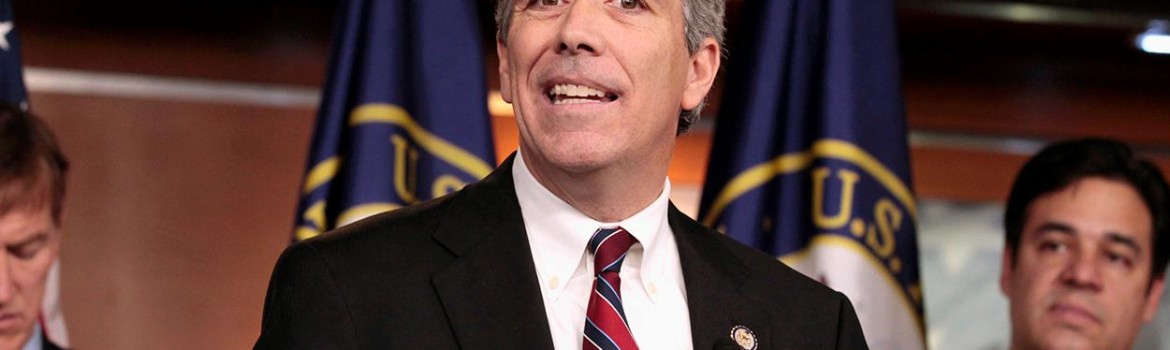
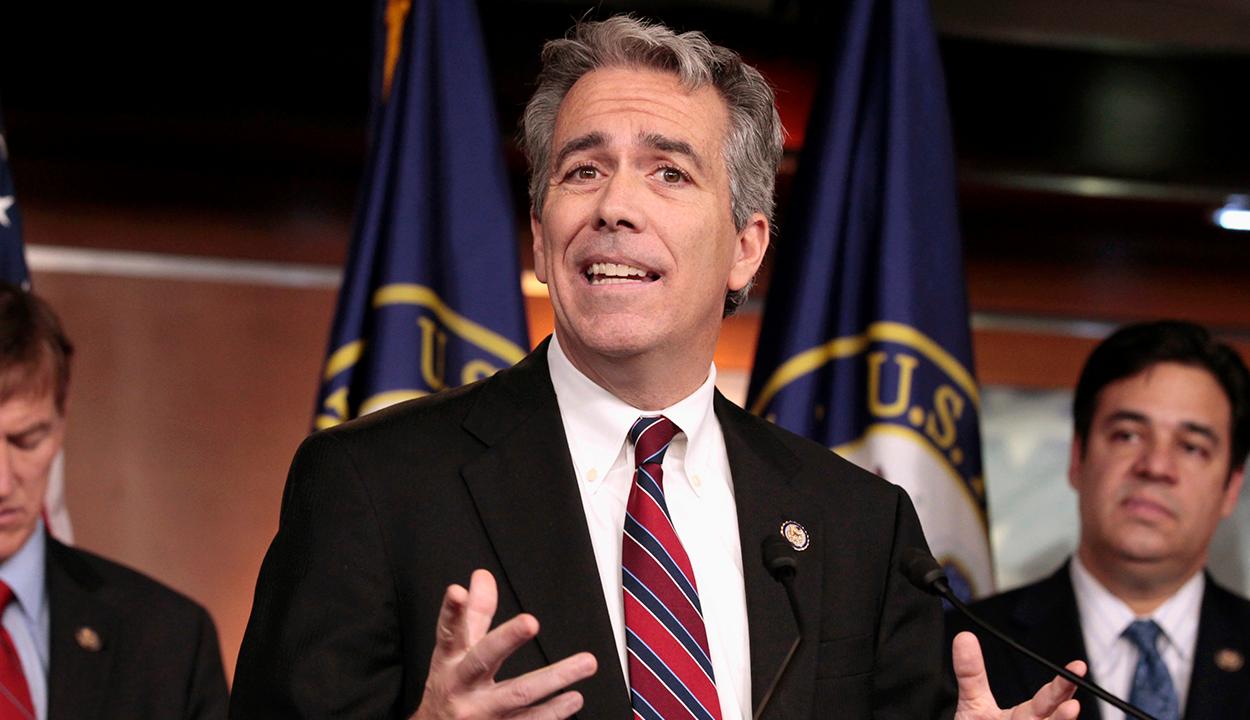
“Trump and his allies and the Republican National Committee are doing whatever they can do to eliminate primaries in certain states and make it very difficult for primary challengers to get on the ballot in a number of states,” former Rep. Joe Walsh, who recently launched his campaign, told Politico. “It’s wrong, the RNC should be ashamed of itself, and I think it does show that Trump is afraid of a serious primary challenge because he knows his support is very soft.”
2020 DEMS CUT FROM HOUSTON DEBATE RIP DNC FOR ‘LACK OF TRANSPARENCY,’ VOW TO PRESS ON
RNC officials told Politico that it had nothing to do with the state decisions.
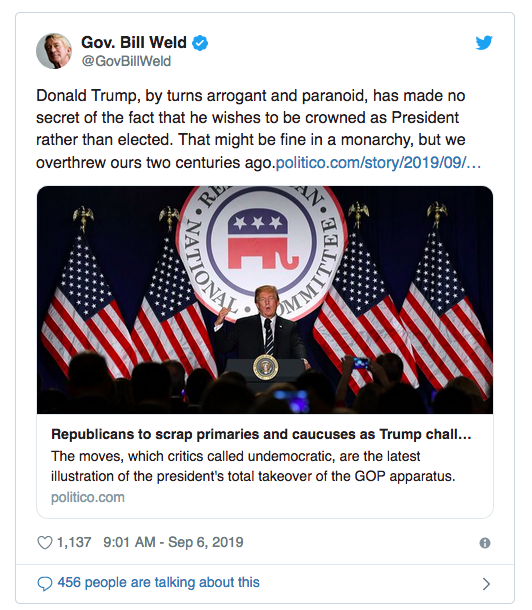
“Donald Trump, by turns arrogant and paranoid, has made no secret of the fact that he wishes to be crowned as president rather than elected. That might be fine in a monarchy, but we overthrew ours two centuries ago,” tweeted former Mass. Gov. and primary challenger Bill Weld.
The push reflects a broader debate around how states hold their contests running up to the general election.
There was never a move to scrap the Republican presidential primary in New Hampshire, the state that holds the first primary in the race for the White House. State law mandates that New Hampshire hold the first presidential primary every four years.
But three of Trump’s top supporters in the Granite State made an initial push late last year for the state Republican Party to drop its decades-old neutrality clause in order to formally back the president in the primary against any challengers. Top GOP leaders in the state opposed the idea, and Republican Gov. Chris Sununu insisted that “the New Hampshire State Republican Committee must remain neutral in primaries.”
The ringleaders of the proposal to have the state party formally endorse Trump dropped their bid.
Because of the libertarian streak among New Hampshire Republicans, and the ability of independents – who make up roughly 40 percent of the state’s electorate – to vote in either the Republican or Democratic presidential primaries, the Granite State is considered the state where long-shot GOP candidates looking to challenge Trump for the party nod would try to make their stand.
Source: US Government Class
Share:
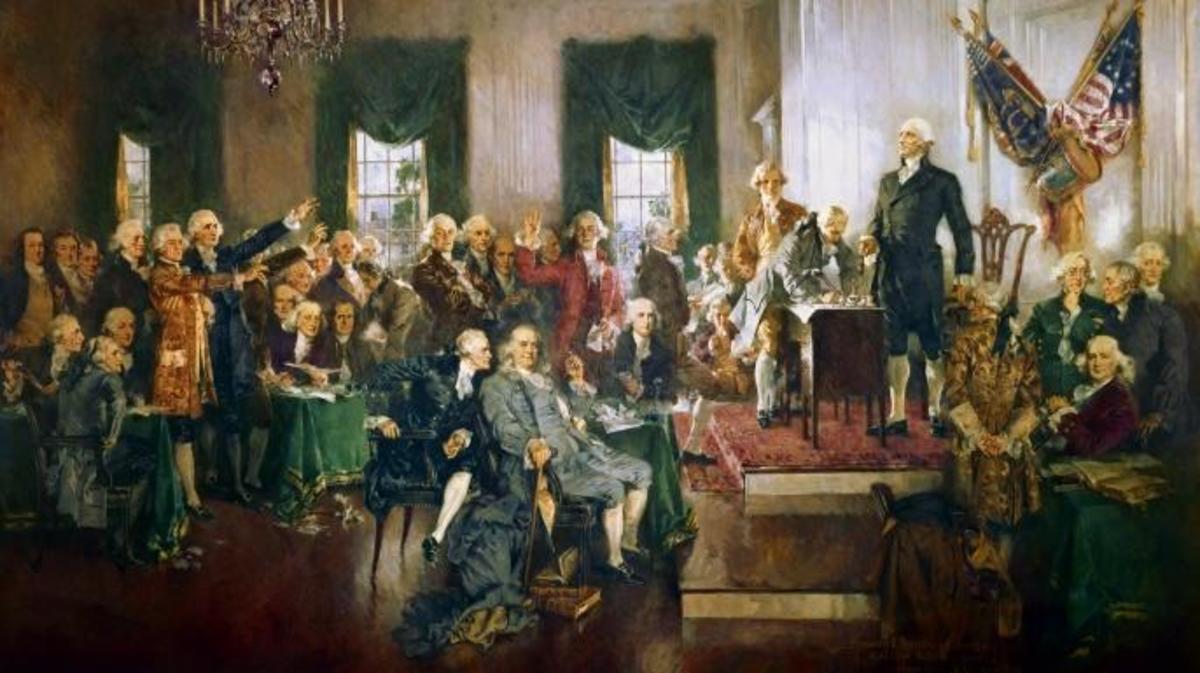
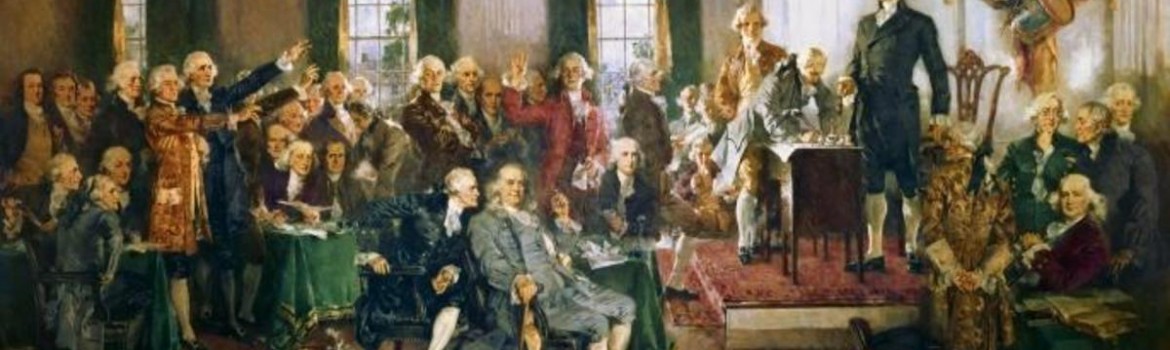
7 Things You May Not Know About the Constitutional Convention
This is not a news article to comment on. It is just some fun facts. Comments are closed.
Christopher Klein – The History Channel
1. Several framers met with untimely deaths.
Was there a curse of the Constitution? Alexander Hamilton was famously killed by Aaron Burr in 1804, but he wasn’t even the first framer of the U.S. Constitution to die in a duel with a political rival. In 1802, North Carolina delegate Richard Spaight was mortally wounded by a dueling pistol fired by sitting congressman John Stanly. Four years later, Virginian George Wythe died of arsenic poisoning, likely at the hand of a debt-riddled grandnephew and heir. Pennsylvania delegate Gouverneur Morris died in 1816 after a ghastly bit of self-surgery in which he unsuccessfully attempted to dislodge a urinary tract blockage with a piece of whale bone, while New York’s John Lansing mysteriously vanished in December 1829 after leaving his Manhattan hotel room to mail a letter.
2. Rhode Island boycotted the Constitutional Convention.
America’s littlest state had a big independence streak. Rhode Island, distrustful of a powerful federal government, was the only one of the 13 original states to refuse to send delegates to the Constitutional Convention. It was a decision that rankled even the normally temperate George Washington, who wrote in July 1787 that “Rhode Island … still perseveres in that impolitic, unjust, and one might add without much impropriety scandalous conduct, which seems to have marked all her public councils of late.” On the condition that a Bill of Rights be included, Rhode Island became the 13th state to ratify the Constitution on May 29, 1790, more than a year after Washington was sworn in as president.
3. Some big names were absent from the Constitutional Convention.
When Thomas Jefferson gushingly called the Constitutional Convention delegates “an assembly of demigods,” he wasn’t being full of himself. Jefferson was not among the founding fathers who gathered in Philadelphia; he was in Paris serving as minister to France. John Adams was also abroad, serving as minister to Great Britain. Samuel Adams, John Hancock and Patrick Henry—who turned down an invitation because he “smelt a rat in Philadelphia, tending toward the monarchy”—also did not participate.
4. Attendance was, shall we say, spotty.
When the Constitutional Convention opened on May 14, 1787, only delegates from Pennsylvania and Virginia were present. It wasn’t until May 25 that a quorum of seven states was achieved. Weather—ever the convenient excuse—was blamed for the tardiness, but the convention was plagued throughout with attendance issues. While James Madison boasted that he never left the proceedings for more than “a casual fraction of an hour,” his fellow delegates were not as fastidious. Nineteen of the 74 delegates to the convention never even attended a single session, and of the 55 delegates who did show up in Philadelphia, no more than 30 stayed for the full four months. New Hampshire’s delegation arrived two months late, by which time two of New York’s three delegates had left in opposition to the proceedings, leaving just Hamilton behind and depriving the state of a quorum to vote. Thus, Washington wrote that the Constitution was signed by “11 states and Colonel Hamilton.”

5. Not all the delegates who attended the convention signed the Constitution.
Although 55 delegates participated in the Constitutional Convention, there are only 39 signatures on the Constitution. Fourteen men, having already left Philadelphia, were not present for the signing, and only Delaware delegate John Dickinson had a proxy sign for him. Three delegates—Elbridge Gerry of Massachusetts and Edmund Randolph and George Mason of Virginia—were dissatisfied with the final document and refused to ink their signatures.
6. “We the People of the United States” was a late change.
The Constitution’s iconic opening line was not included in early drafts of the document. Instead, the preamble started with a much less pithy litany of individual states listed from north to south: “We the people of the States of New Hampshire, Massachusetts…” and so on. Credit for the late alteration goes to a five-person Committee of Style—comprised of Hamilton, Madison, Morris, William Samuel Johnson and Rufus King—and Morris is considered to have been responsible for composing much of the final text, including the revised preamble.
7. The man who handwrote the Constitution was not a delegate.
While Morris has been nicknamed the “Penman of the Constitution,” the real hand wielding the quill that scrawled the final copy of the Constitution belonged to Jacob Shallus. The assistant clerk of the Pennsylvania State Assembly was paid $30 and given just two days to write most of the document’s 4,543 words on four sheets of vellum parchment. While his script was exquisite, Shallus wasn’t totally flawless. Between the final article and the delegate signatures on the Constitution’s final page is an “errata” paragraph listing some of the minor errors he had made along with their corrections.
Source: US Government Class